
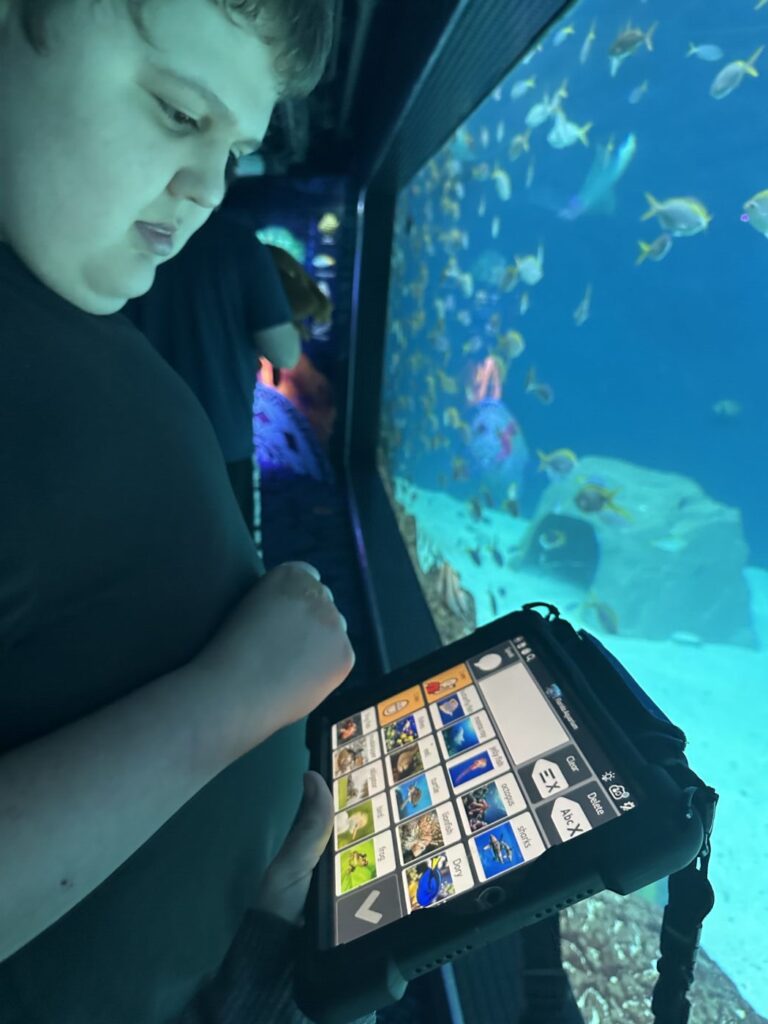
In our home, communication looks a little different, and that’s something I’m proud of. All three of my kids are AAC users, and over time, I’ve learned that communication doesn’t only happen during therapy sessions or structured lessons. It happens all day long, while cooking breakfast, reading a story, or going to the grocery store.
Homeschooling gives us the gift of time and flexibility to make communication a natural part of everything we do. Every moment can be a language opportunity, not through pressure or drills, but through modeling, connection, and joy.
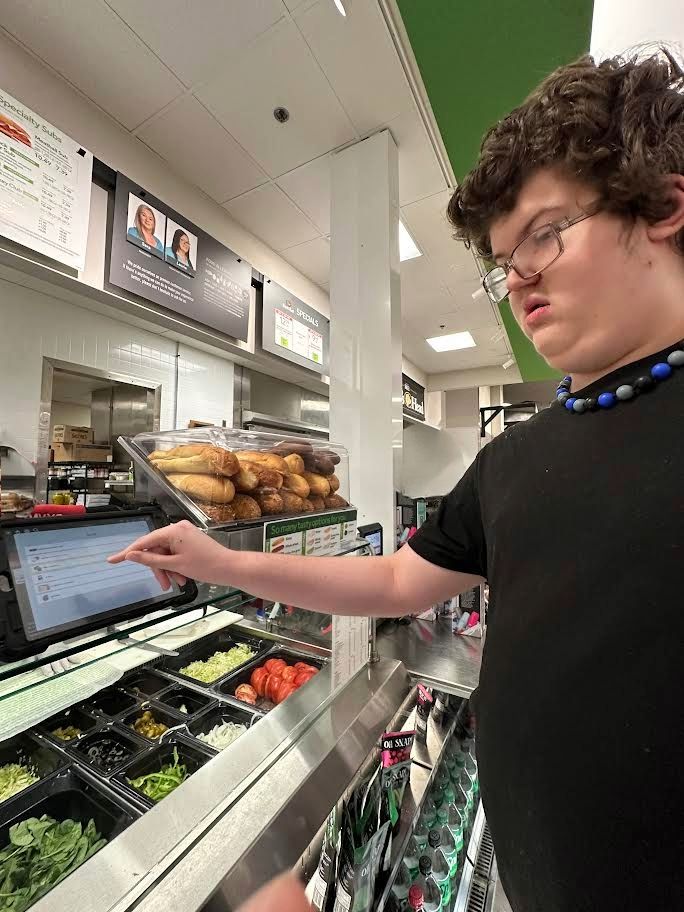
Language Happens in the Everyday
One of the most powerful lessons I’ve learned as a parent and homeschool educator is that language doesn’t grow only through practice, it grows through presence.
During our homeschool days, I try to model language as we go about daily routines and activities:
- Narrating what’s happening: “You’re pouring the milk.” “We open the book.”
- Giving choices: “Do you want more or are you all done?”
- Describing what we see, feel, or do, not because I expect a response, but because I want to give my children words for their world.
This is the heart of AAC, modeling without expectation. It means showing language, not testing it. It’s giving words freely, trusting that understanding and expression will grow in their own time.
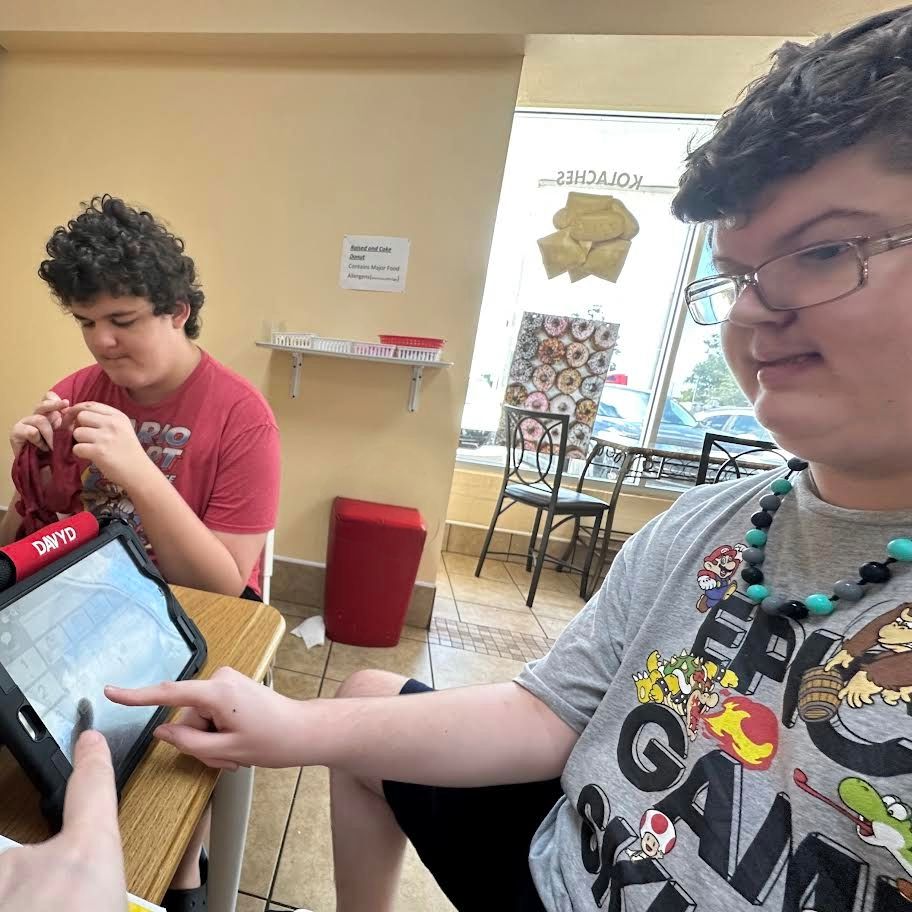
Model AAC and Core Words Naturally
AAC modeling doesn’t have to be a separate activity; it can flow with your homeschool rhythm. Keep devices nearby and model core words during real experiences.
Some examples from our homeschool day might look like this:
- Help – “Can you help me stir?”
- Go / Stop – “Let’s go outside!” “Stop, look!”
- On / Off – “Turn it on.” “Lights off.”
- Open / Close – “Open your notebook.” “Close the lid.”
- More / All done – “Want more time?” “All done drawing?”
It’s not about perfection or hitting a goal; it’s about building exposure. Even if they don’t respond, they’re learning that communication has purpose, power, and variety.
Turn Ordinary Moments into Communication Opportunities
Homeschool life is full of natural, meaningful chances to model and build language:
- Cooking: “We mix, pour, and taste.”
- Sensory play: “Squish the dough. Push the roller.”
- Art: “Paint on. Wipe off. More color.”
- Reading: “Turn the page. Look, that’s a dog!”
- Cleaning up: “In the bin. Out of the box. All done.”
These everyday interactions are where communication becomes real. They show that AAC isn’t just a tool for therapy, it’s part of living and learning together.
Celebrate All Forms of Communication
Not all communication looks the same, and that’s what makes it beautiful. A gesture, a look, a button press, a sound, a smile, they all have meaning. When we acknowledge and respond to those efforts, we tell our children:
I see you.
I hear you.
Your voice matters.
And over time, that consistent modeling and acceptance build confidence, the kind that empowers our kids to use their voices, however they communicate.
AAC Awareness, Every Day
AAC Awareness Month is a reminder that every child deserves a voice, and that voice deserves to be honored, not just in October, but every single day.
For our family, AAC isn’t something we “do.” It’s simply part of who we are. It’s woven into our homeschool days, our routines, our laughter, and our learning. When we model without expectation, we give space for understanding to bloom. When we communicate with love and patience, we teach that all voices are valid and that communication can happen anywhere, at any time, with anyone.

- AAC Awareness Month: Building Language Every Day in Your Homeschool - October 22, 2025
- Using AAC to Support Your Homeschool Curriculum - September 29, 2025
- Back to Homeschool: How to Assess Where Your Child Is Starting This Year - August 25, 2025


2 Responses
Hello. Hope this finds you well. I haven’t seen any postings since this and was wondering how everything was going. I’ve missed you. Your blogs have been very helpful as I am now using TAH full time all subjects for my homeschool. These blogs were my support!
Thank you for the message! We are looking to restart our blog soon!