I was recently so inspired by an Occupational Therapist who created a sensory garden for her students using a small grant and some good old-fashioned community outreach. The project reminded me of the value of “learning the old school way” — through movement, hands-on exploration, and connection with the natural world. In a time when so much learning happens behind desks or screens, sensory gardens invite children to move, touch, smell, and discover. They bring back that essential truth: kids learn best not through systematic instruction, but by experiencing, exploring, and interacting with their environment.
Why Sensory Gardens Matter


A sensory garden is more than a patch of plants — it’s a living, breathing learning tool. For students of all ages and abilities, but especially for children with sensory processing needs, sensory gardens:
- Provide safe regulation spaces where students can calm, focus, and reset.
- Encourage curiosity and exploration through textures, colors, sounds, and scents.
- Support language and communication — every leaf, flower, or sound of wind becomes a chance for shared words, connection and generalization.
- Build responsibility and pride as students help care for plants and watch them grow.
- Offer natural stress relief for both children and staff, creating a soothing environment during busy school days.
A sensory garden is a therapeutic tool that doubles as a classroom extension!
Getting Started Doesn’t Have to Be Overwhelming


When schools or therapy centers hear “garden,” they often imagine a full courtyard or expensive landscape project. But the truth is, sensory gardens can start small and simple. Start with donations! Begin by asking families, staff, and community members if they have extra pots, soil, or gardening tools. Everyday items — like old crates, wooden pallets, or even tin cans — can be repurposed into planters. Local nurseries and home improvement stores are often willing to donate plants or materials when they know the project is supporting children.
Tap Into Grants and Community Support


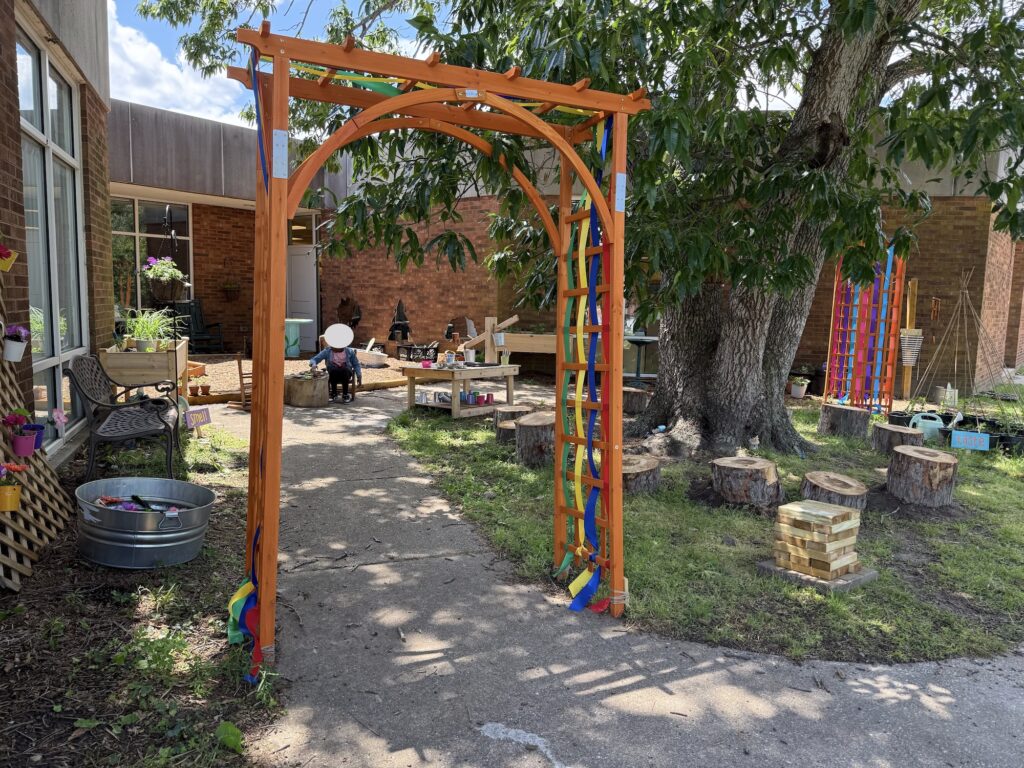
There are countless grants available for schools that promote outdoor learning, sustainability, or special education initiatives. Educators & service providers can look into community foundation mini-grants, partner with Master Gardener programs or garden clubs, and even share the project on social media to invite sponsorship. This Occupational Therapist used a combination of a community funded grant, donations from community members and school staff. The local public works donated the cut tree logs and the wire spindle table, the mural paintings were donated by an art teacher and friends and families donated extra supplies!
Think Mini, Not Massive

Not every school has the space (or budget) for a full outdoor garden — and that’s okay. Mini sensory gardens can be just as powerful. Some ideas include:
- Indoor sensory pots with herbs like lavender, mint, and rosemary for calming scents.
- Texture bins with smooth stones, moss, sand, or bark for hands-on exploration.
- Window boxes outside a classroom or office filled with colorful, seasonal plants.
- Portable planters that can move between classrooms or therapy spaces.
Even one small pot of lavender in an office corner can provide a grounding moment for a child who needs to pause and regulate.This outdoor sensory garden was an empty space between walls with this beautiful tree already planted. Take a look around your school’s space, you never know what you might find!
Involving Students in the Process


To make a sensory garden truly meaningful, involve students in its creation and care. Encourage them to choose plants based on their senses (“Which leaf feels soft? Which flower smells strong?”). Rotate responsibilities for watering, tracking growth, or journaling about what they notice. Use the garden as part of lessons — from counting petals in math, to writing sensory poems in language arts, to practicing communication skills during group exploration.
In therapy or counseling offices, providers can use these spaces as visual anchors during sessions, or as a calming reset when a child feels overwhelmed. It’s important to remember that while these are “free learning & exploration spaces” you might have to teach some students how they can use the materials etc. and to stay in the designated area.
A Growing Movement


Sensory gardens are blossoming in schools, daycares, and therapy centers everywhere. What makes them powerful isn’t size or budget — it’s intention. A single planter cared for with purpose can offer the same spark of connection as a full courtyard garden.
By creating even the smallest sensory spaces, educators and service providers remind students that their needs for calm, curiosity, and joy are seen and valued. Sometimes, all it takes is a pot of lavender on a windowsill to plant the seed for growth. Happy creating!

- Cultivating Calm Through Sensory Gardens - September 3, 2025
- Setting Up a Visually Structured Classroom: Little Details, Big Impact - August 6, 2025
- Nouns and Verbs: From Books to Play - July 2, 2025