

An area that visuals will save your little butt is behavior management. Since visuals are so beneficial and helpful for our students – why not use them for the most challenging things – reducing problem behaviors? Genuis right. Behavior visuals can be used to maintain appropriate behavior while decreasing inappropriate behaviors. You can use visuals to explain classroom rules, behavioral contingencies, or expectations. You can use visuals as commands during behavioral issues since receptive language may be even more difficult during these times.
Token Economy Visual
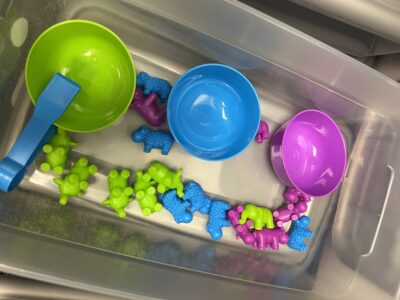
You can use a reinforcer visual for some of your students with less language. Students can pick at item to work for from a visual choice board. Students earn tokens based on work completion or behavior.

Time Out Visuals
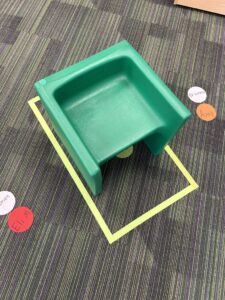
You can use visuals to illustrate a behavioral consequence such as time out (you should only be using time out for attention behaviors!). I don’t to give time out at the drop of the hat. I like to show strikes or warnings. This 3-strike to time out visual is hands down my all time favorite behavior visual. For one student it worked literally like a magic wand.

Social Stories
Social stories are one of the most common use of visuals for behavior management. Social stories provide children instruction on how to handle different social situations or environment. These stories describe what is appropriate to do in the situation. This is critical for our students since understanding implied rules or commands is difficult. If you are telling me not to stand, how do I know what I should be doing? Although I do think these tend to be some what over prescribed (ie. applied to ever and any behavioral problem – it’s not a fix all), social stories do have their place among effective visual interventions.

Visual Classroom Rules/Expectations
Stating classroom rules and expectations is essential for our students. Again – we need to tell them what we expect of them and not let them guess. But like I keep saying – many individuals with autism won’t understand our verbal language when we are telling them the rules or procedures. It is helpful to use visuals to illustrate these expectations. There are some theories that say rules should only be said in the positive but I like a combo of both. If the rules are only negative (ie. Don’t bite. Don’t hit.) our students may not infer what they should be doing. However – I think only saying what should be doing may not be concrete enough. Our students may benefit from being explicitly told what not to do as well. I like these class rules because it also defines what good and bad behavior are. We talk about being good or bad all the time but let’s make sure our student really know what these terms mean before we assume.

Other behavior visuals include:


Latest posts by Sasha Long, M.A., BCBA (see all)
- Planning for the Fall: Part 4 and 5 – Visually Structured Tasks and Routines - January 30, 2026
- Using TAH Curriculum for Homeschooling from a Homeschooling Parent - September 10, 2022
- Using The Autism Helper Curriculum for Homeschool - August 8, 2022
4 Responses
I love your blog and your products! I have a few kids with autism on my caseload- it must be so amazing to teach an autism class! Do you have any books/articles you can recommend for gen. ed. teachers? Laura
Read-Write-Create
Hi Laura! Thanks for reading! I recommend this book: You’re Going to Love this Kid!by Paula Kluth
I love this it will help so much
Happy to hear! Thanks for reading 🙂