

Receptive Language
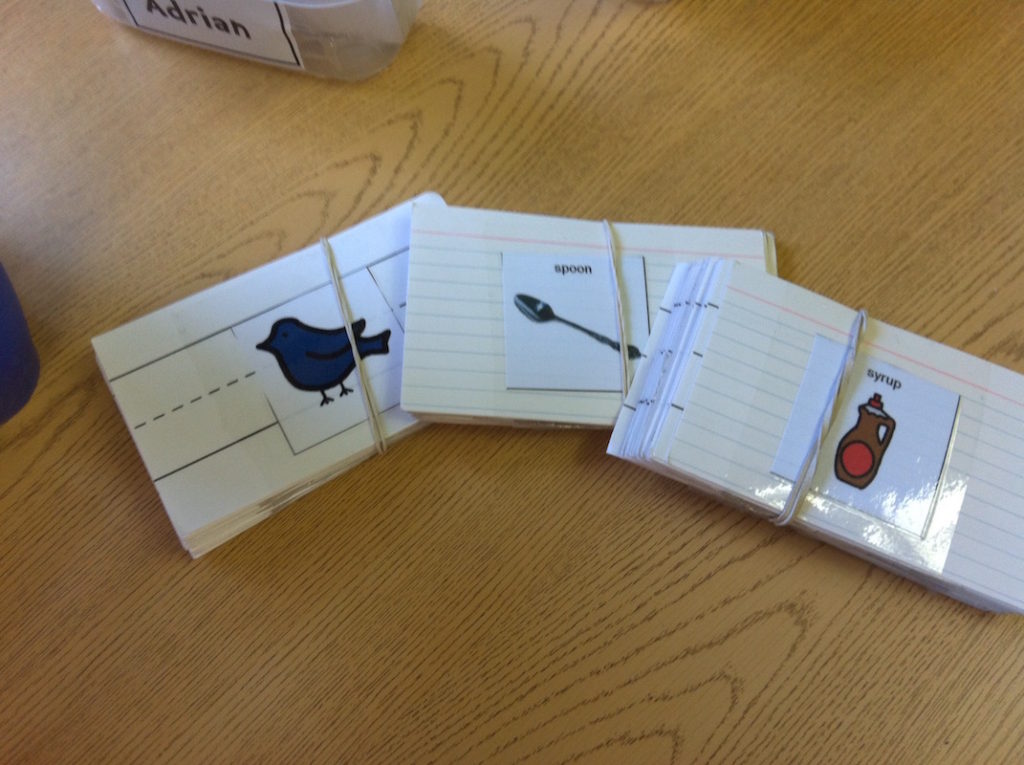
For students who are nonverbal or students who are verbal but have problems processing receptive language, this is a great way to expand vocabulary. Select a small (4-8) group of vocabulary words. Lay the flashcards out. Say, “show me the____.” If the student points to the correct picture, provide praise and a reinforcer. If the student does not respond correctly, provide error correction or some errorless learning. I like to divide that large set of vocabulary into these smaller sections of a few cards. Once the student hits mastery on each set, the words get moved to fluency instruction. I liked to organize these cards into two sections – known and unknown. Once we mastered a set, we grabbed 5 new cards from the unknown box. Having the whole set made up front helped this station run all year long with little extra prep or pausing for making new materials.

Expressive Language
For working on naming the items, you can run this program the same way. Select small groups to work on at a time. Take data, provide reinforcement and error correction, and keep adding the ‘know’ box!


- Planning for the Fall: Part 4 and 5 – Visually Structured Tasks and Routines - January 30, 2026
- Using TAH Curriculum for Homeschooling from a Homeschooling Parent - September 10, 2022
- Using The Autism Helper Curriculum for Homeschool - August 8, 2022

2 Responses
My class does “vocabulary flashcards” daily after they complete their morning work. This activity has really increased their expressive & receptive skills. My paras now run this activity–data & all! It was simple to set up & implement.
Great to hear!