
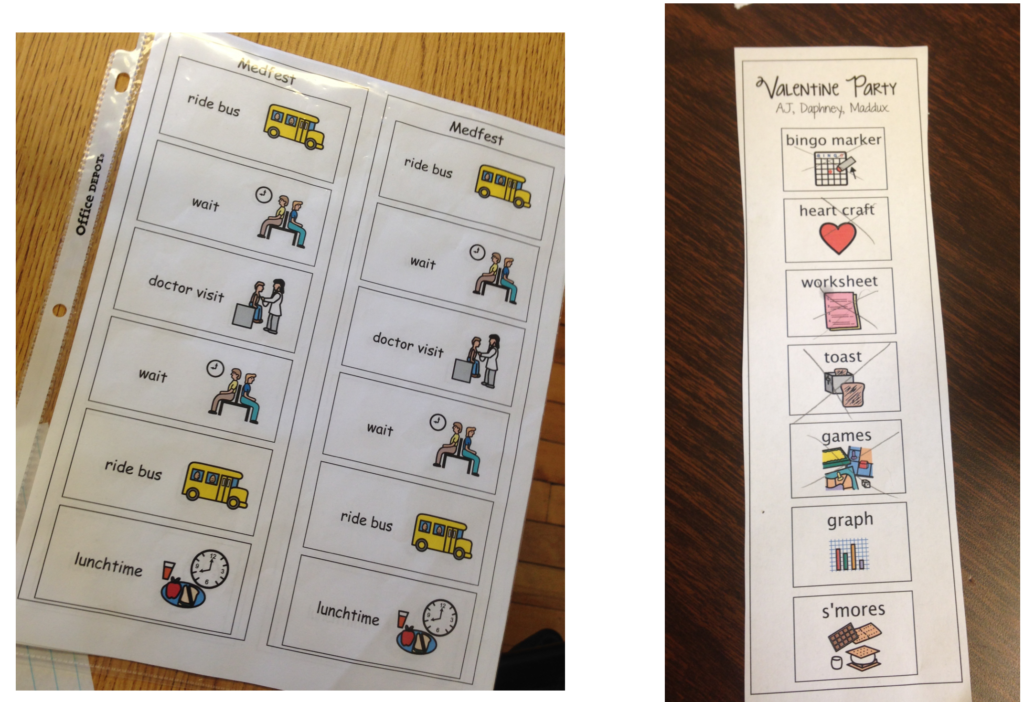
On my Facebook live video last week, I rambled on and on about my two main goals of September – routines and reinforcement. The start of the year is all about establishing routines. You need to teach your students to follow their daily schedule, what to do within each part of the classroom, and how to follow every embedded routine within you day. It’s a lot. The other goal for the start of the school year is establishing yourself and your classroom as a reinforcer. My mantra is “be a chocolate chip cookie.” You want your students to want to be around you. You want them to want to be in your classroom. If “time in” is amazing then “time out” can be an effective behavioral strategy.
Being Reinforcing Doesn't Mean Let Your Students Do Whatever They Want
Now before you get ready to purchase stock in gummy bears and capri suns, hold on one second. Establishing yourself and your classroom doesn’t mean it’s a free for all party. It doesn’t mean let your students do whatever they want. It doesn’t mean give them the iPad all day. While some of our general education classrooms may absolutely love a day fill with unstructured, “do what you want” playtime – our kids hate it. And so do I.

Think about how potentially challenging unstructured time can be. There are no clear rules. Expectations are not explained. There is no start or finish. If he is playing with blocks on the floor, can I play blocks on the table? Can I stand on the table? Can I throw blocks while standing on the table? Chaos can quickly ensue. It will be loud. It will be sensory overload. Our kids will not like it. So yes, we don’t want to jump with some heavy hitting academics on week 1 or 2 but we also don’t want a “let’s just hangout” plan either. You need a little bit from both worlds.
Begin to Teach the Daily Schedule

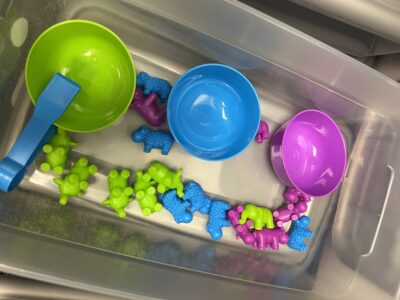
Begin to follow the daily schedule. But instead of working on fluency cards at the fluency center – play with play dough, at teacher time, do a puzzle, and at math centers color a picture. Put a big visual on the table showing what you are doing. But work on that daily schedule. Be at the right tables at the right time. Your students will like that they can see what to expect from they day. They know when lunch is, if there is gym class, and how long until the end of the day.
Use Visuals within Each Station

Use visuals or mini schedules at the centers to show what you are doing. Many of our learners struggle with receptive language, so you telling them – “We are going to draw a picture” may not be clearly understood. Make sure visuals support your verbal cues!
Yep, the teacher down the hall does look like she’s having a good time with her free play student driven choice time, but that’s just not right for our group. Giving structure, visuals, and consistency helps our students know what to expect. It will decrease anxiety and increase you as a reinforcer.
Your classroom will be a place they want to be because people want to be in places where they know what to expect.
When you set up structure and routines, you are telling your students that you speak their language. They can count on you and they can count on your classroom to be a place that will make them feel safe and understood!


Latest posts by Sasha Long, M.A., BCBA (see all)
- Planning for the Fall: Part 4 and 5 – Visually Structured Tasks and Routines - January 30, 2026
- Using TAH Curriculum for Homeschooling from a Homeschooling Parent - September 10, 2022
- Using The Autism Helper Curriculum for Homeschool - August 8, 2022

8 Responses
Sasha can you please direct me to your post about work avoidance and escape behaviors? My student is in escape mode with ALL work-even with a 1:5 work to to break time ratio, token board with student chosen reinforcer, visual mini schedule for tasks, and sensory! June seems so far away!!!!!
I am not a teacher but I love your blog and your FB page. I watch and use what I can at home with my son. He is 6. Thanks. Keep sharing please!!!
Same same same same ^^^ please help.
Here are a whole set of posts: https://theautismhelper.com/?s=escape+behaviors. Take one intervention at a time, take data, give it a few days before moving on. It’s tempting to try a whole bunch of interventions at once but sometimes it’s helpful to analyzing each strategy in isolation. Good luck!
Thank you so much for reading, Cynthia! Your son is lucky to have such a dedicated mom 🙂
Be sure to check out all of these posts: https://theautismhelper.com/?s=escape+behaviors. There are a bunch on escape behaviors!
What do you use to make the schedules? Board maker? I tried to find it in the post but I’m not sure if I’ve missed it! Thanks!!
I have used a combo of different programs: boardmaker or my own images using powerpoint. I have these two resources with Boardmaker schedules:
https://www.teacherspayteachers.com/Product/Ready-to-go-Daily-Picture-Schedule-Great-for-Children-with-Autism-SET-1-280206
https://www.teacherspayteachers.com/Product/Ready-to-go-Daily-Picture-Schedule-Great-for-Children-with-Autism-SET-2-436598