
Field trips are simultaneously super fun and horribly stressful. It’s great to get out of the classroom, let loose, have new experience, but if you are anything like me – you probably feel like you are on the verge of a panic attack the whole time. Check out my quick tips on surviving a field trip and keep those heart palpitations at bay:
Plan, Plan, Plan!
If there is a word called overprepared you now embody that word. You live and breathe overprepared. You think in checklist form. You’ve planned for best case scenario, worst case scenario, and everything in between. You’ve written it out. You’ve made copies of that plan for your staff. You are ready.

Prep Your Students for the Change
While field trips are a cause for celebration and a special, exciting day in most general education classrooms – in your classroom it may not be such a joyous occasion. Many of our learners struggle with changes to their schedule. And first and foremost – a field trip is a change. Even if it is a good change that they may enjoy – it’s still a change and we need to be sensitive to that. Our students thrive off of routine and predictability and field trips have literally none of that.
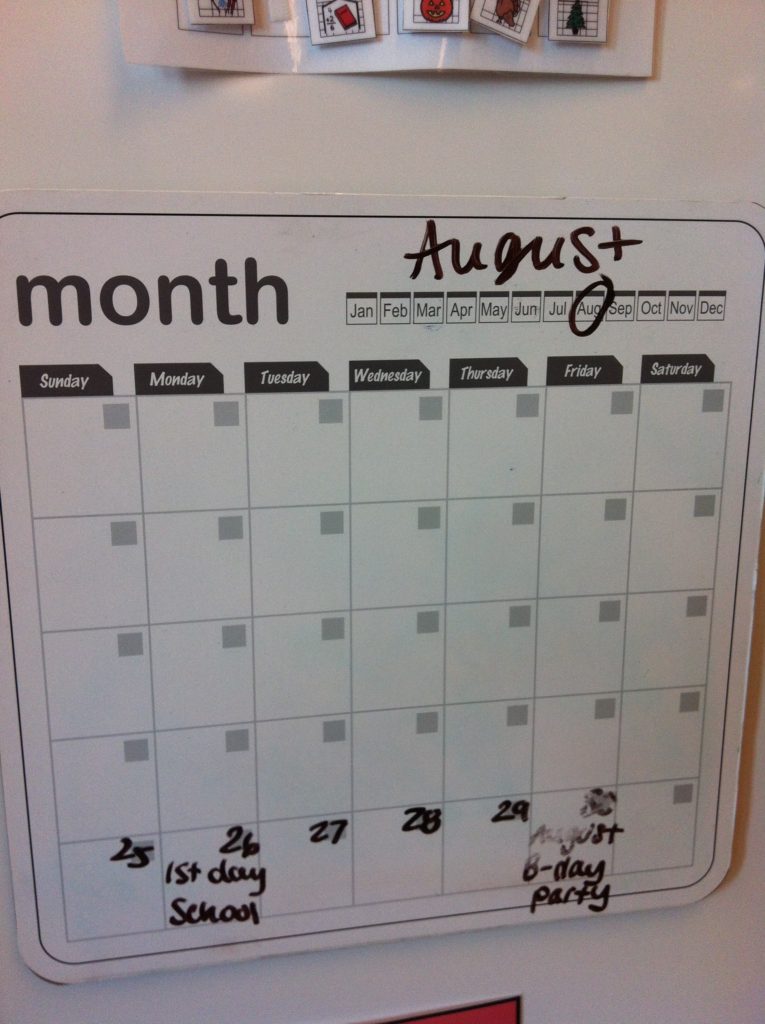
Use visuals to show student the change. Put it on the calendar, put it in their daily schedule, use mini schedules.


Don't Stop Counting
If you feel like you have counted enough – go ahead and count those pretty little heads one more time. Safety is your number one priority on a field trip and everything else is a distant second. Spend the extra few minutes to count and recount. Regroup every so often and have everyone sit down so you can collect yourself, stay organized, and do another headcount.
Pack it Up
Hand sanitizer? Check. Tissues? Check. Gloves, diapers, wipes, and more gloves? Check. Candy? Check. Sensory toys? Check. When I go on a field trip, I feel like I am packing my carry on for a cross country flight. But no. These are just my in-case-of-emergency essentials. Usually I don’t need most of this things but my motto is – better safe than sorry! Bring anything and everything you may need. I also recommend tossing in a bunch of reinforcers. And think about those high powered reinforcers that will get your stubborn kiddo to get off the school bus when he is edging towards a level 6 meltdown. Stash them away in the bottom of your bag – just in case!
If you end up on one of the field trips where you end the day in a solemn vow to never ever take a field trip again – I encourage you to take that as a learning experience. What exactly went wrong? How could this have been prevented? Would more staff have helped? What taking a smaller group of students have made it easier? On those bad days – there is no where to go but up! So get back on that horse and try again! 🙂


Latest posts by Sasha Long, M.A., BCBA (see all)
- Planning for the Fall: Part 4 and 5 – Visually Structured Tasks and Routines - January 30, 2026
- Using TAH Curriculum for Homeschooling from a Homeschooling Parent - September 10, 2022
- Using The Autism Helper Curriculum for Homeschool - August 8, 2022

12 Responses
Make sure to bring a list with home addresses, and all of the parents phone numbers, including emergency phone numbers. A student might have an incident and for safety or medical reasons, they need to be picked up while on the trip. For instance, I have had a student have a grand mal seizure, and another refuse to stay with the group which became a problem. One time we came back and there had been a bomb threat at school, and we were stuck on our school busses. We needed to contact families to pick their children up, and we were able to drop some students off whose family members didn’t have transportation, as it was still relatively early in the school day. As well, I have on hand any safety or medical plans for particular students. I make copies and give everyone a folder clearly marked “field trip”. I prep it at the start of the school year and only need to update it as changes occur.
I use google images and make a book of the rules that show the students some of the things we will see and what the rules are for that place- I’ll send one over tomorrow when I’m at work and maybe it can be added to the post. I made the first one, now I just change the pictures and some of the rules to fit with each place we go. The day before our last field trip, I completely forgot to make a book and the students kept asking me where was the book for tomorrow’s field trip??? I quickly whipped one out during my lunch!
Very helpful for our private little field trips.. !! Any tips on introducing new places to go? We have huge difficulties with that. I show pictures of the new place and tell him that we are going there, but how should i introduce the “actually going there”.. Still in the “inside playroom” mode…, with little outings to swimming pool 🙂 Thanks so much Sasha!
GET THE BUS DRIVER’S PHONE NUMBER!! Last week, our bus driver took off to get “coffee” while we were grocery shopping! I had to call the school office to connect to the head of busing to contact where this driver went while silently praying my kiddos wouldn’t go into behaviors. Because our field trip form said 10:30-11:30 (and we finished around 11:00), the driver assumed it was alright to leave… we turned it into a learning experience to remain patient, calm, and flexible but one phone call to the driver would have saved me a huge headache!
Great suggestion!!!
Love that idea!! Google image is such a life saver 🙂
OMIGOD how was this not my first piece of advice!? Haha. Yes – I have learned that lesson the hard way (similar to you! 🙂 )
Maybe take a quick video of the place on your phone as well and show him while in the playroom? That might help make it seem more real!
Hi Sasha, I am not sure if you are still answering questions from this site, but I am a professor at the University of the Sciences in Philadelphia in the PT program. We are looking at inclusion of kids with special needs in field trips, and my particular interest is in kiddos with a diagnosis of autism. I would love to get more information from you if you were willing? I am Barb Kellar and here is my contact information: [email protected]. Phone is 215-596-7223 and here is a link so you can see my credentials!
https://faculty.usciences.edu/faculty/kellar-barbara
Many thanks! Barb
Hi Barb, I can answer basic questions via email at [email protected].
I am helping a friend plan a college field trip. Students are mainly juniors and seniors- between the ages of 20-22. They will be gone for approximately two weeks, mostly together in a van! He explained that he has 10 students, one being on the spectrum (high functioning autism). Any tips or suggestions for this age range?
I would have schedules (visual or written) prepared with the events for each day. If possible, provide backup activities or choices!