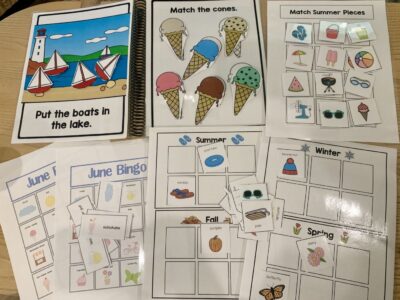
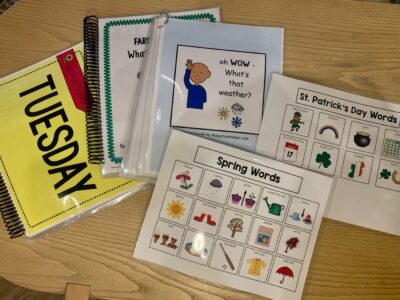
While IDEA (Individuals with Disabilities Education Act) states that students should begin receiving transition services no later than the year they turn 16 it is never too early to begin working towards transition.
“Transition services” are the training and education needed for students with special needs to acquire the skills necessary for adult living. That includes everything from career aptitude, employment readiness and interviewing skills to doing the laundry and making a meal.

And, while many teachers and parents feel they must sometimes put transition skills on the back burner so they can address other, more pressing skills, with such a broad definition of transition services, the truth is: you are probably teaching those skills even now! Let’s use “doing laundry” as an example.
A math lesson on same/different might easily include sorting laundry as one of its examples. White and colored laundry not only forms a clear visual for this concept but also gives students the first lesson they need in the adult skill of doing the laundry.
As students become more confident with this basic concept, sorting of sheets and towels; hot-water and cold-water clothes; or washable and non-washable clothing might be added to the lesson depending on individual student’s needs and abilities.

Symmetry is another concept easily translated into the task of doing laundry. By folding one leg over the other with a pair of jeans, or laying one sleeve on top of the other, or simply folding a towel in half, students can practice their visualization of lines of symmetry and skills at matching while learning a “real world” skill that will serve them well in adulthood.
Other categorizing skills can be practiced by sorting shirts, pants and underwear into separate piles for storage in boxes or drawers. (If folding laundry is too difficult for some students, rolling clothes for storage can be a success-filled and efficient way to store clothes.)
Along the way, language skills can be enhanced as students describe the clothing by color, or texture, or even tell a story about the day they wore the clothing.

For more ideas and lessons for students with special needs, download the free workbook, “Doing Laundry” from the Daily Living Skills series. While originally written for high school students working on transition skills, and written on a third grade level, this book breaks down the basic skills needed to do the laundry into bite sized chunks that students can easily digest. This book is available at: www.teacherspayteachers.com/Store/Susan-Traugh.

Not only can daily living skills be used to teach across the curriculum, but they allow students to feel real pride at their ability to take care of themselves and be independent. So, happy folding!
This guest post was brought to you by Susan Traugh.


- Planning for the Fall: Part 4 and 5 – Visually Structured Tasks and Routines - January 30, 2026
- Using TAH Curriculum for Homeschooling from a Homeschooling Parent - September 10, 2022
- Using The Autism Helper Curriculum for Homeschool - August 8, 2022