The topic this month on the blog is all about data. I thought I’d weigh in on this topic from the speech perspective. As we all know data is so important and necessary in our profession. I use data to determine if students need to receive speech-language therapy, what therapy goals to create for each student, if students are making progress toward their goals, and of course data to determine when students are ready to be dismissed from speech therapy. Data, data, and more data. The problem is how to accurately and effectively collect data during speech therapy sessions and keep it organized. This is the challenge. I do take data ever session unless I am using it as a teaching session for a new concept.
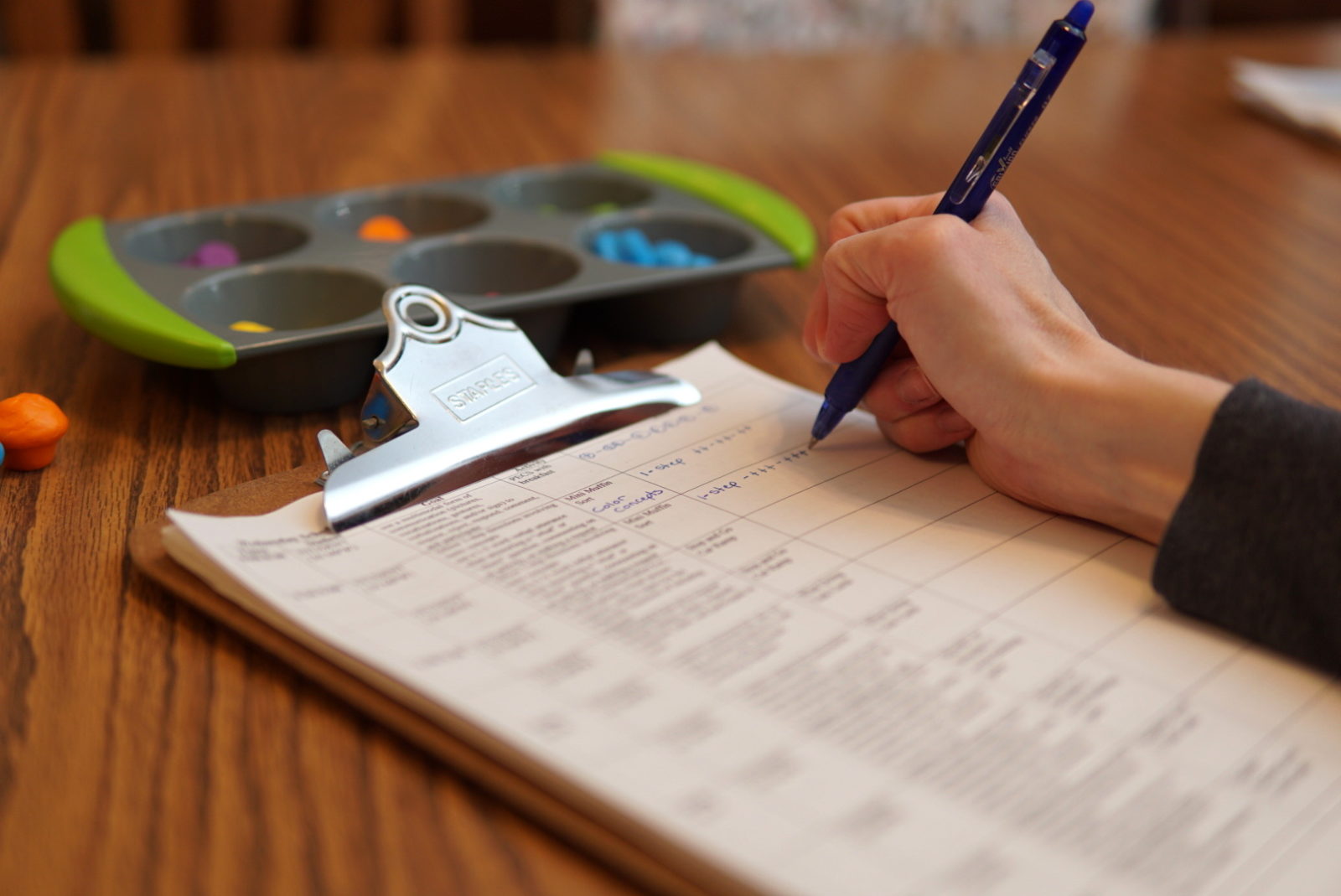
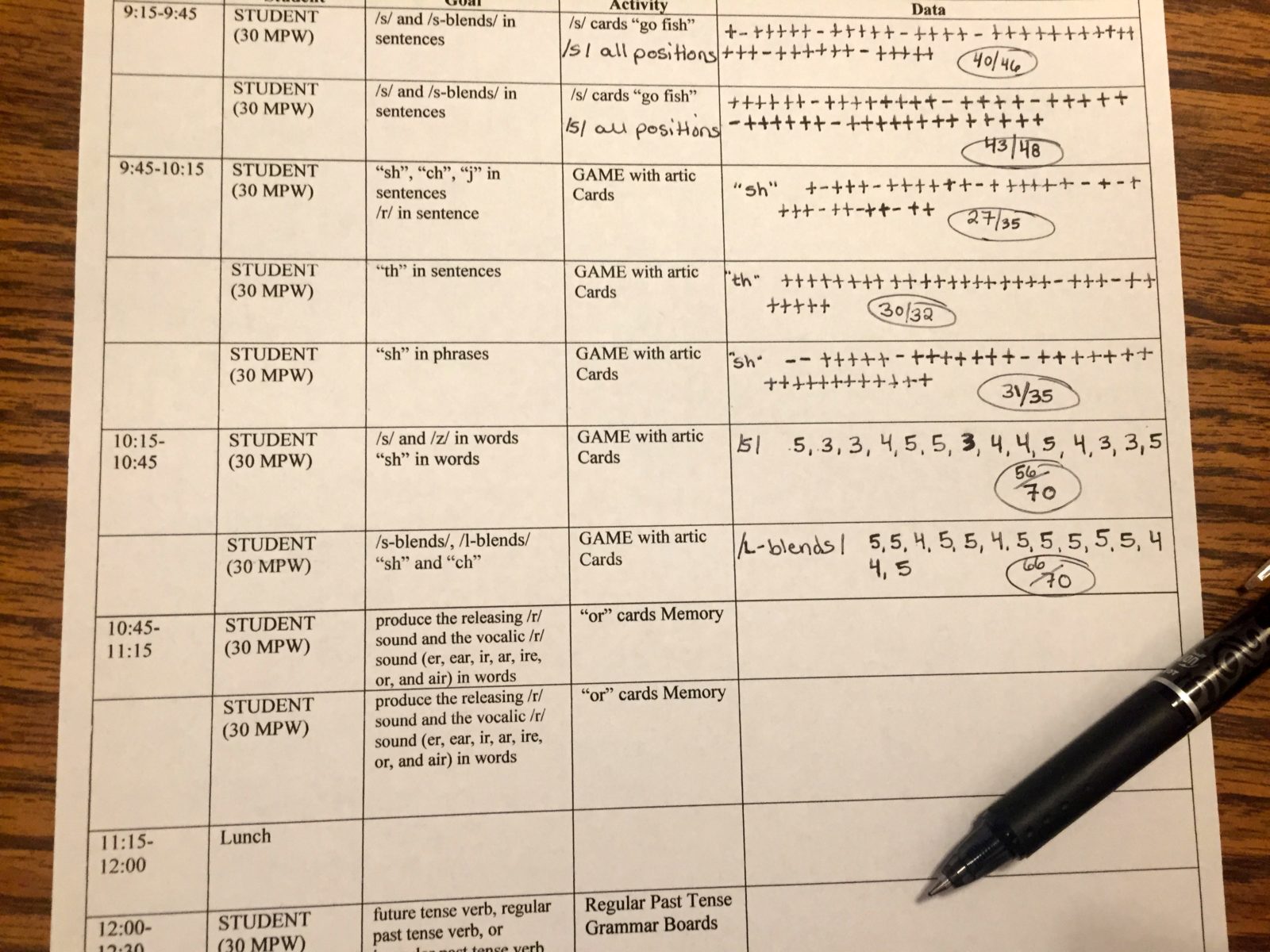
How you collect data depends on your setting, student population, and IEP goals. Do you track IEP goals with percentages, trials, a rating scale, checklists, etc? For example, in my district we write goals based on trials and not percentages but every setting can be different. Some districts place restrictions on how your IEP goals need to be written so you need to take data on how your goals are written. A topic for another day is make sure goals are written so you can take data on those goals…believe me I have seen some interesting goals over the years that are not data tracking friendly! Over the years I have tried different systems but I always tend to fall back on using the same data sheets I used with my supervisor in grad school. I’ll share about the data sheets I use in therapy but I have seen other data sheets which may work for you. If a system works for you then stick with it. The bottom line is we need to be taking accurate data on our students’ goals. I still take data on paper because I’m in different classrooms and work with a wide range of students some who need some intense supports so trying to track data on a computer or another device does not work for me. I’m all over my buildings but I always have my clipboard with data sheet on it. I arrange my data sheet for each day. I write the students name, IEP goals, the activity we do, and then add the data onto the sheet. Having 60 students on my caseload and most of my students have between 2-3 speech goals makes it difficult to remember everyone’s goals which is why I have them with me.

For me articulation goals are much easier to take data on then language goals. With my articulation students if I’m working on the sound in isolation, syllables, or at the word level I do sets of 5 to make it easy for me to track data. I’ll have the student say the target word 5 times and I’ll just write the number of correct times in the box. I know that each on is out of 5 trials. At the end I just add up what they got correct and know what it would be out of such as 33/50. That makes it easy. If they are working at the sentence level I just use plus and minus signs to track the data. For some of my students I give them white boards or sticky notes and have them track their data along with me so we can see if we got the same number. That also makes the student take ownership over their goals.
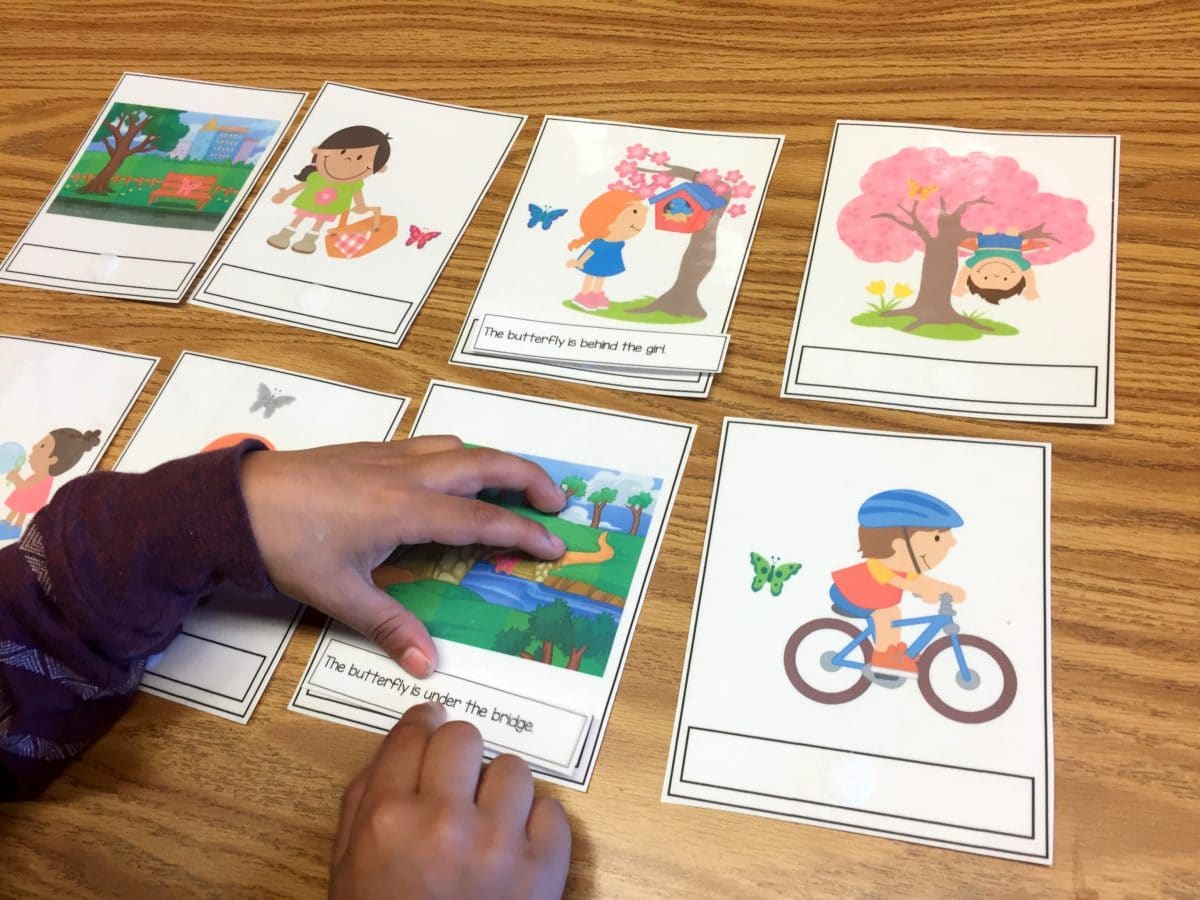
Other goals can be more challenging to track data during the session. For example, I have lots of students working on following directions involving a variety of linguistic concepts. I try to focus the session on specific concepts and only track data on the targeted concepts and make sure I write what was targeted when I write up my daily progress note. One session, I might be working on prepositions and I only track data on those prepositional concepts. I try to set up sessions or use material that will target those specific concepts. For example, I like to use adapted books and do an activity related to that so the focus is on the same concepts. I might use the book “Where is the butterfly” and then do the “Where is the Butterfly – Preposition Scene Matching” activity with it. I can take data on those activities and know which prepositions were targeted. Then when I write my progress note it might go something like this “student followed 15/18 2-step directions involving prepositional concepts “on, under, next to, above, and below” given no more than 1 additional visual or verbal prompt”. Another group I might work on following directions involving color and number concepts or following directions with colors and shapes. The progress note would indicate the data from those concepts.

I also like using task cards during sessions because it makes collecting data easier for me. I can complete a set number of cards and know exactly what I targeted. If I’m working on synonyms I use my synonym vocabulary boards. My progress note would be something similar to this “student provided the correct synonym for a given vocabulary term in 16/20 trials given a choice of 3 answers and one visual prompt.”


I also make sure when I track my data I indicate the level of prompting I am providing. When learning a new concept the student may need hand over hand prompting. For example, with PECS my student will complete all the single picture exchanges but it might be with hand over hand prompting and I need to make sure I indicate that so it does not seem like the student can complete exchanges independently. The prompting may also change during the session and I note that. It might be the student selected the desired item picture from a visual field of 2 and exchanged it with the communication partner in 10/20 opportunities given one visual prompt which increased to 20/20 provided an additional physical prompt.
Figuring out a good system to track data and actually taking that data during a short session with multiple students is so challenging but important. We want to make sure that are students are making progress towards their goals or we need to make some changes in those goals or our teaching strategies. The data can show the great work of our students and us.

- Vehicle Themed File Folder Activities - May 18, 2021
- Counting and Sorting Vehicle Fun - May 4, 2021
- What Color is the Vehicle? Adapted Book and Free Vehicle Themed Bingo Games - April 20, 2021