
Plan Ahead
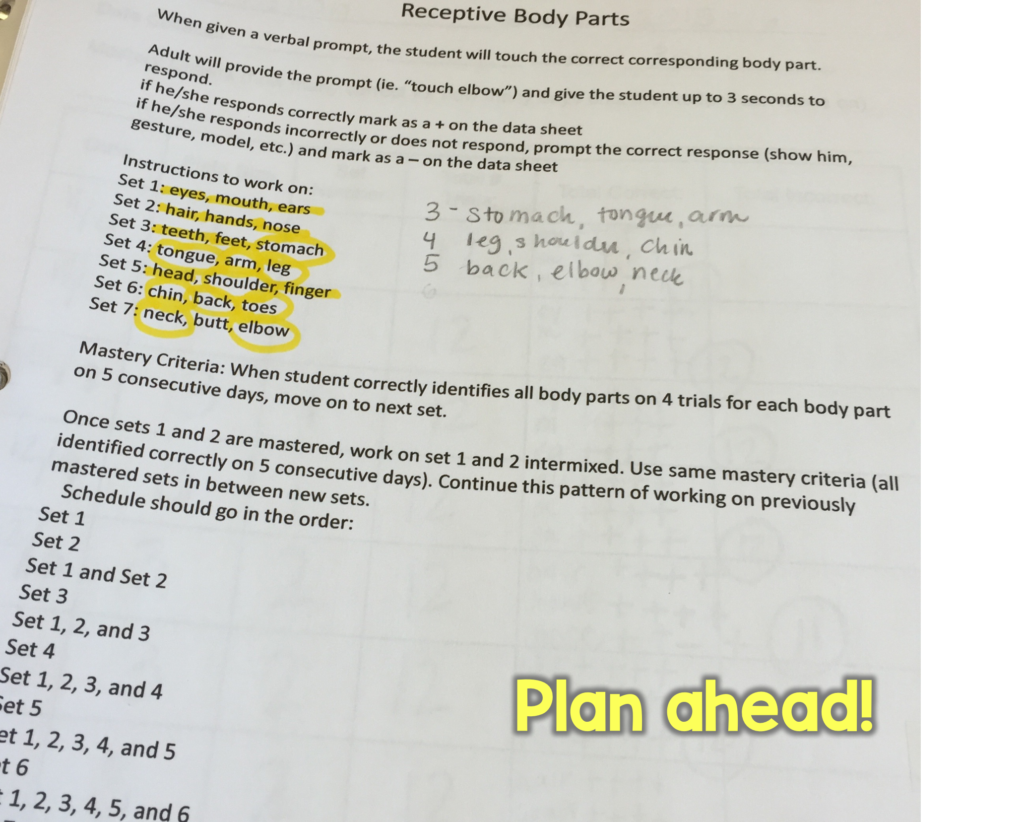
I have this bad habit of thinking people can read my mind. I will have one of my paraprofessionals working with a student on identifying body parts. They work on eyes, nose, ears, and head. One morning in the midst of all of the entering the classroom chaos, my para says, “Oh guess what, Johnny mastered those body parts, which should we work on next?” As I try to wrangle an upset student into the room, make sure breakfast is eaten by the other 12 with minimal milk spilled on the floor, and teach another student how to check their new schedule all within 3.5 minutes I look at her breathlessly and say, “That’s great. I’ll let you know!” Four seconds later you couldn’t have paid me money to remember what she just said. Flash forward 2 weeks and I glanced over at her station super pissed that they have been working on the same puzzle for the 5th day in a row. Well, duh Sasha. You didn’t tell them what to do next. Avoid this whole long anecdote of mishap and PLAN AHEAD. This whole situation is easily avoided by planning which the skill sequence ahead of time!


Set Your Staff Up For Success
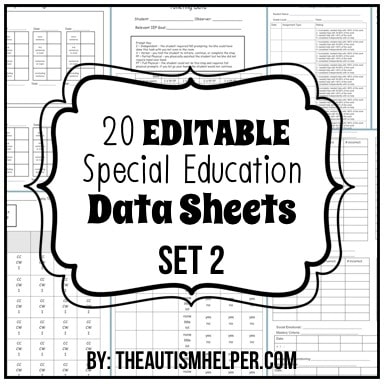
You can’t just assign a paraprofessional a few IEP goals to work on at a center and cross your fingers and hope for the best. You are the teacher. You are the manager. You need to still set up that station and that IEP goal and do so thoughtfully and so that paraprofessional is successful. The 3 main things you need: 1) the Program Guide, 2) the (simple & easy to use) data sheet, and 3) the materials. If you set up those things, you and your staff will be on the same page!
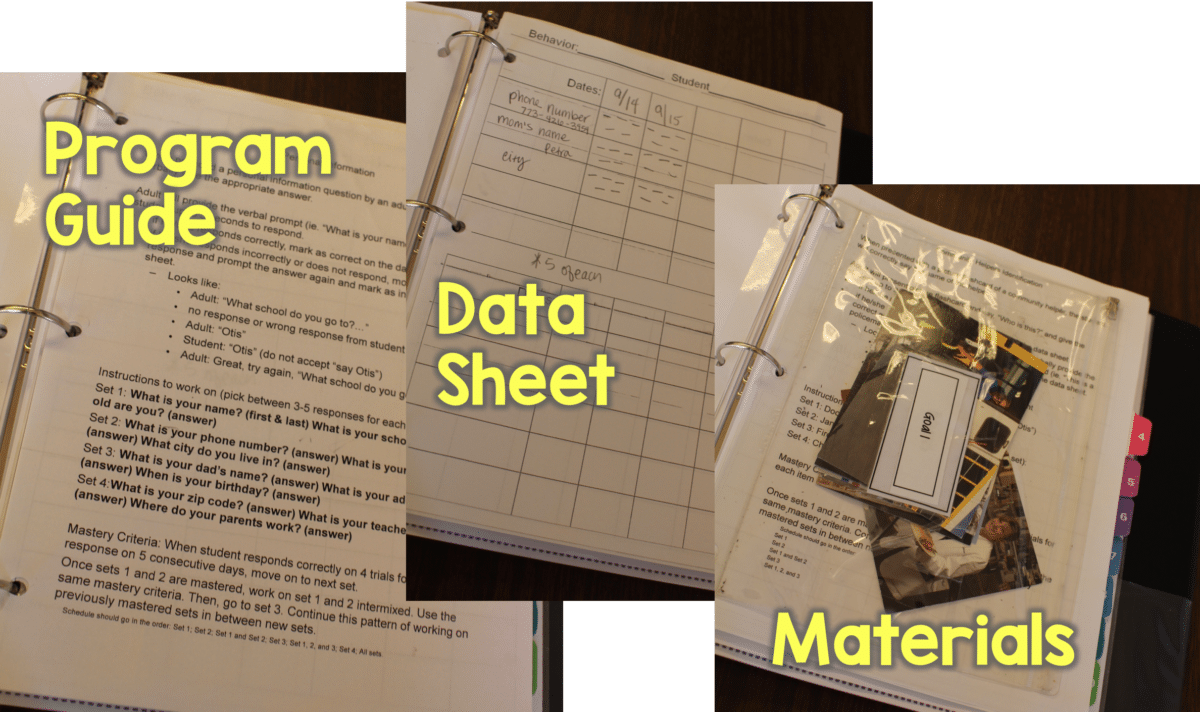
Create a Program Guide for each IEP Goal
So you may be asking – what is this program guide? And doesn’t that seem like extra work when we have the IEP already? A program guide is a simple written out script and outline of how to run the goal. Yes it is redundant but I have met very few teachers who can readily utilize the organization of a standard IEP on a daily basis. I want something simple, quick, and straightforward. The standard IEP has too much additional information and the organization doesn’t work for me. A great program guide says simply what the goal is, how the adult should run the goal, what to do for correct and incorrects, what sets to work on and it what order, and what is mastery criteria.
{if this seems horribly overwhelming – we have loads of these pre-made! Check out our Discrete Trial Program Guides and Data Sheets: Set 1, Set 2, and Set 3. Comes with guides and data sheets and they are editable!}
Create Easy to Use Data Sheets
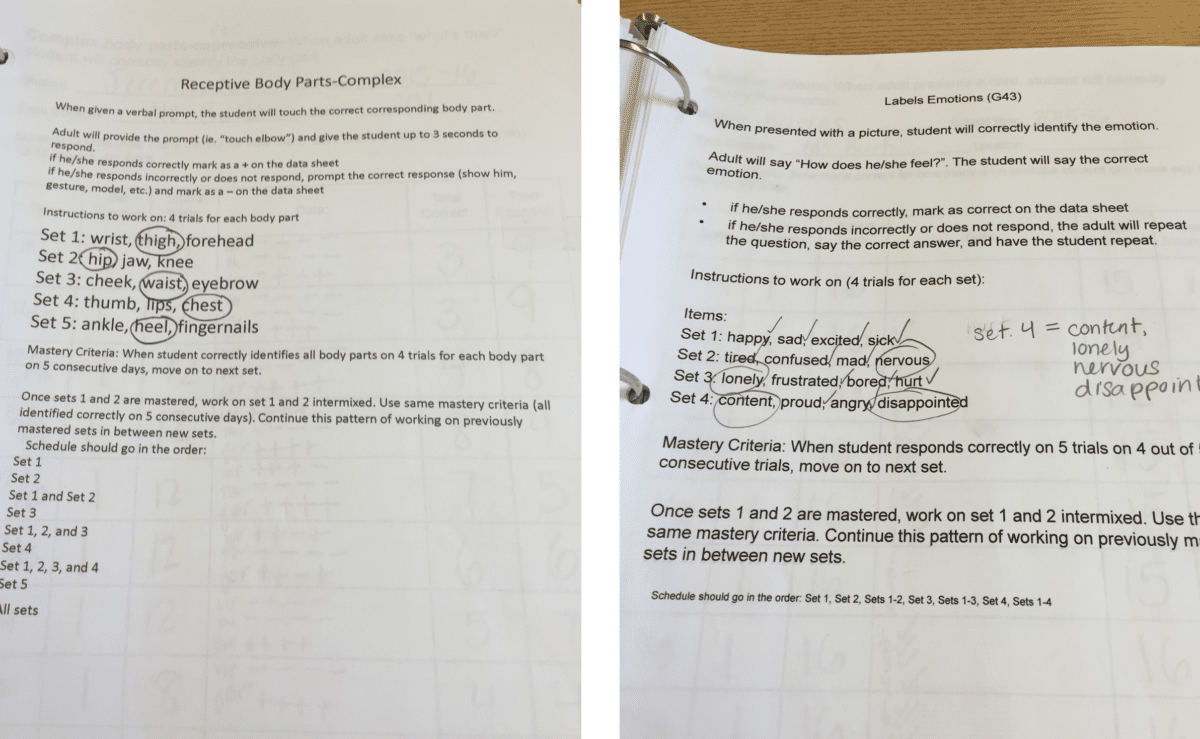
We’ve chatted tons this week about the importance of easy and quick. We are still living and breathing by that mantra – if it isn’t easy, you won’t do it. I’m excited to share some of my favorite tips and tricks to creating manageable and useable data sheets!






- Planning for the Fall: Part 4 and 5 – Visually Structured Tasks and Routines - January 30, 2026
- Using TAH Curriculum for Homeschooling from a Homeschooling Parent - September 10, 2022
- Using The Autism Helper Curriculum for Homeschool - August 8, 2022

2 Responses
I hope that you still respond to your viewers . I cam in a dilemma to determine when to take data with different groups .I was frantic last year trying to take data of all my students in a day or twice a week. Some teachers have it down to a science , they will observe or take data of a group certain days a week. I feel like I am missing others kids data when I do it this way. Please help me or give me a systematic example of how you take your data
Hi Ashley – Great question. I think it’s all about setting up systems, routines, and schedules. Maybe you can pick certain kids to take data on certain days? So even if you are missing out on other students’ data those days – you know you are schedule to take data on that student the following day. Does that make sense?