
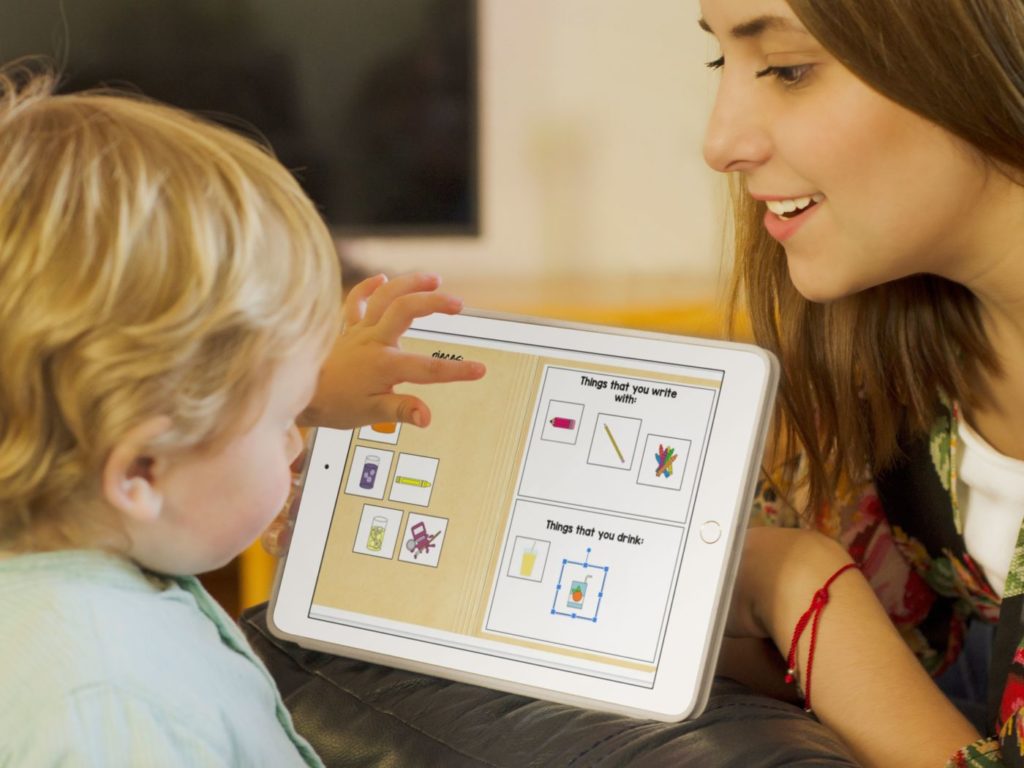
What is the VB-MAPP?
The VB-MAPP is based on B.F. Skinner’s analysis of verbal behavior and stands for Verbal Behavior Milestones Assessment and Placement Program. I have been using this since 2011! The VB-MAPP is criterion-referenced and can be used as an assessment tool, curriculum guide, or a progress monitoring tool. This can be used by clinicians, educators, assessment teams, parents, and anyone on the child’s team! This is not only for children with Autism, and it can be used for any child who demonstrates language delays.
This PDF is a wonderful handout from www.stevencelmer.com that gives a nice overview on how to use the VB-MAPP.

How is this organized?
There are five components of the VB-MAPP:
VB-MAPP Milestones Assessment: The assessment contains 170 learning and language milestones that are sequenced across 3 developmental levels (0-18 months, 18-30 months, and 30-48 months).
- The skills assessed include mand, tact, echoic, intraverbal, listener, motor imitation, independent play, social and social play, visual perceptual and matching-to-sample, linguistic structure, group and classroom skills, and early academics. This also includes the Early Echoic Skills Assessment (EESA) subtest which was developed by Barbara E. Esch, Ph.D., CCC-SLP, BCBA-D.
VB-MAPP Barriers Assessment: 24 common barriers to learning that children with autism or other developmental disabilities may face.
- These barriers include behavior problems, instructional control, defective mands, defective tacts, defective echoic, defective imitation, defective visual perception and matching-to-sample, defective listener skills, defective intraverbal, defective social skills, prompt dependency, scrolling, defective scanning, defective conditional discriminations, failure to generalize, weak motivators, response requirement weakens the motivators, reinforcer dependency, self-stimulation, defective articulation, obsessive-compulsive behavior, hyperactive behavior, failure to make eye contact, and sensory defensiveness.
VB-MAPP Transition Assessment: 18 assessment areas and can help to identify whether a child is making progress and if they have gained the skills necessary for learning in a less restrictive educational environment. This assessment tool can provide opportunities and measurable data to set priorities to meet the child’s educational needs.
- The assessment includes measures of the overall score on the VB-MAPP Milestones Assessment, the overall score on the VB-MAPP Barriers Assessment, negative behaviors, classroom routines and group skills, social skills, academic independence, generalization, variation of reinforcers, rate of skill acquisition, retention, natural environment learning, transfer skills, adaptability to change, spontaneity, independent play, general self-help, toileting skills, and eating skills.
Task Analysis and Supporting Skills: There are 35 pages of Task Analysis and Supporting Skills. The supporting skills are not necessarily prerequisites for a specific milestone, nor do they need to be worked on in the exact order that they are presented.
VB-MAPP Placement and IEP Goals: These correspond with the four assessments above. The placement guide provides direction for each of the milestones and it gives suggestions for IEP goals or programming ideas. The placement recommendations can help the educator, school district, clinician, etc. balance out an intervention program, and ensure that all the relevant parts of the necessary intervention are included.

How do I use it?
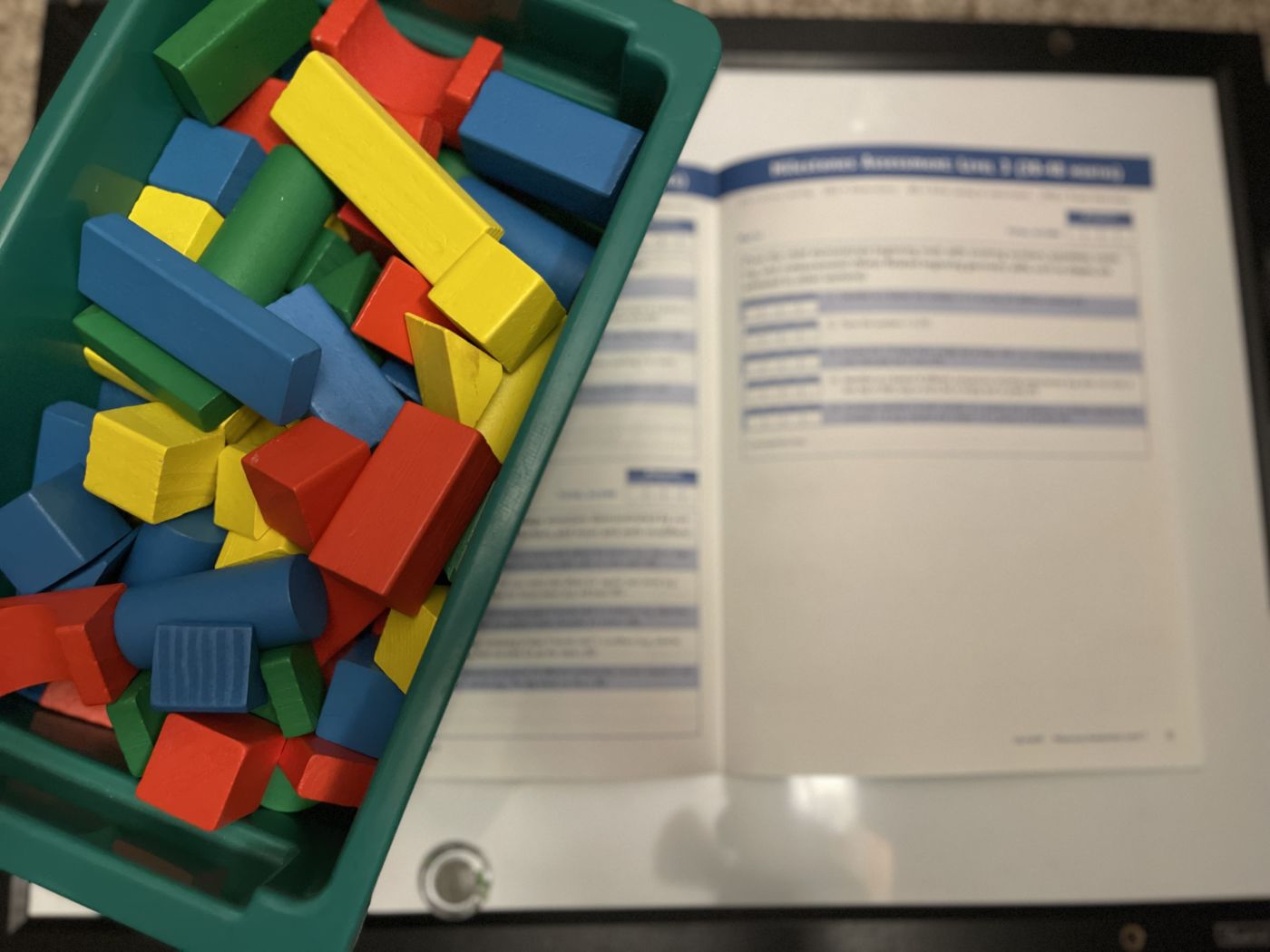
Just like any other assessment, this should not be done quickly, in a hurry, or drill like sitting at a table for two hours (that might be an exaggeration, but you get it). The accommodations listed in the child’s IEP should also be followed carefully during this assessment. I stay organized and keep track of the assessments that are done, whether it is a sticky note system, checklist, tally, etc. When administering any parts of the assessment, I have a box or bag of materials ready to use so I do not lose any time. I want to be quick and engaging! We start the assessment with paring and finding reinforcers through preference assessments. These assessments can be done in a natural play environment or discrete trial. I get to know my learners and run these where I know they can be most successful in order to get the most accurate data.
The VB-MAPP provides a nice baseline level of performance, it gives a clear direction for intervention, comes with a system for tracking skill acquisition, and a framework for curriculum planning. When using the barriers assessment, the clinicians, families, paraprofessionals, educators and professionals on the team can develop specific interventions to help overcome these barriers which can lead to more effective and independent learning. I make it fun, engaging, playful, and show an eagerness to learn which I want my learners to model.
Research and materials
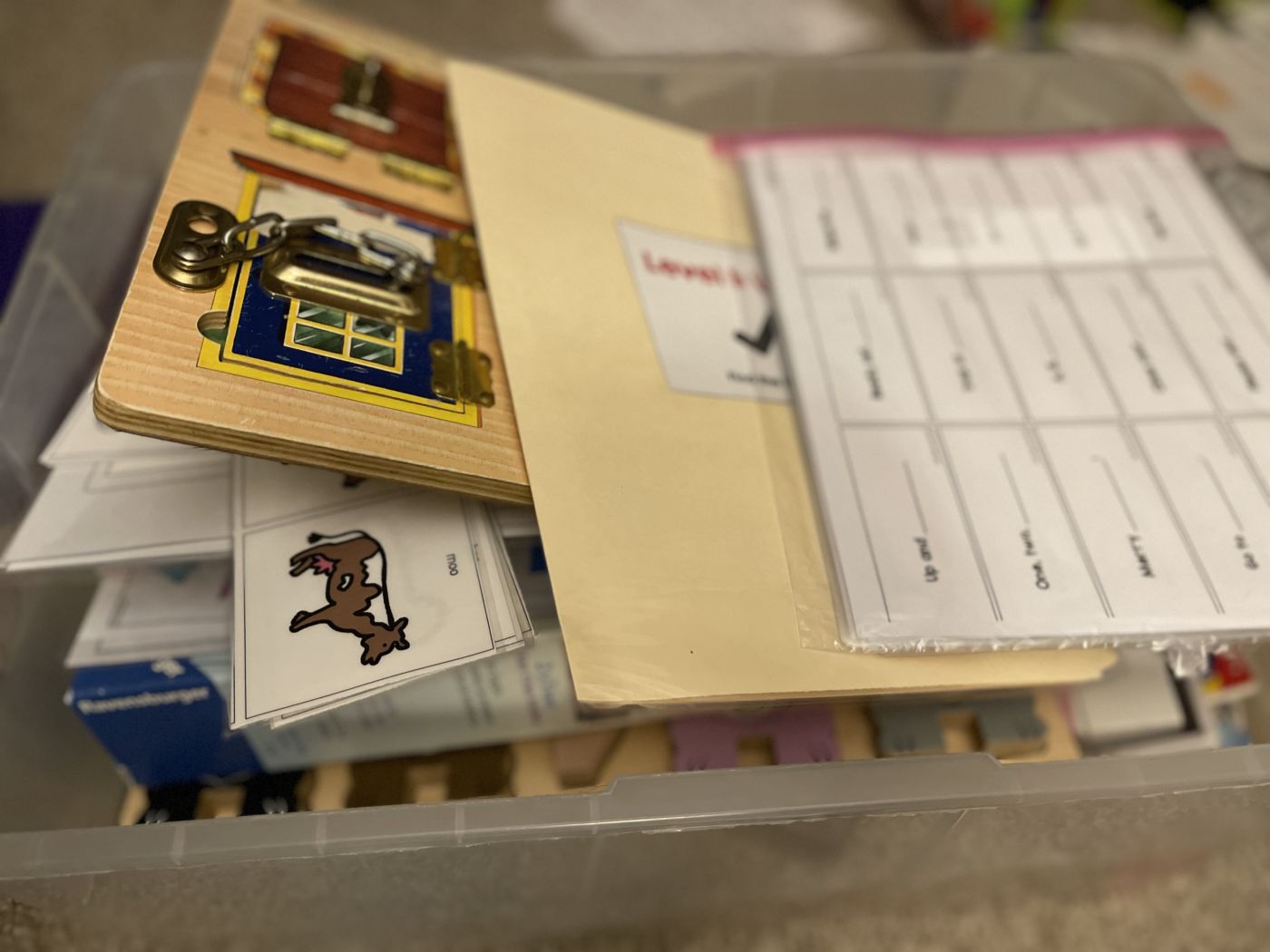
Look around! When I first started teaching and using assessments, I thought I was going to need special materials and panicked when I only received the protocol books and a guide book. I didn’t know why this was left up to me and I thought I was going to do it all wrong! But that was not true. I was able to look through the assessment, read the guide book, and I learned that much of the assessment was happening throughout our normal day already! I was able to brainstorm with the team and gather materials and toys that we already had in the classroom that were perfect for these assessments. The Autism Helper ABLLS-R assessment kit also has a lot of parts to it that match with the VB-MAPP. Don’t re-invent the wheel! We made a list and kept track of what worked and what maybe needed to be switched out and we set ourselves and our learners up for success!

- Embedding Social Skills Into Every Lesson - November 24, 2025
- Top 10 Must-Do Tasks from a Self-Contained Elementary Teacher - September 22, 2025
- Setting Up the Classroom Environment for Independent Learners - August 20, 2025

14 Responses
Do you have a list of the VBMAPP parts that match up with the ABLLS protocol? Looking for a way to save time!
Working on that right now! Just signed a licensing agreement with VBMAPP!
where can I find a list of items you use during the assessment? I think it would be great to have that handy 🙂
Check out our new VB-MAPP Assessment Kit! https://shop.theautismhelper.com/collections/vb-mapp-1/products/vb-mapp-assessment-kit
The administration handout is great but are there any “how to” videos you recommend? I was trained to use VB-MAPP several years ago. I still have all of my materials, but need a refresher course in administration.
There are a ton on YouTube if you search for the VB-MAPP!
Where on the digital version can I find the task analysis part?
Hey! Sorry- I am not familiar with the digital version.
I am looking for it as well. Is it on the site already?
Here you go! https://shop.theautismhelper.com/collections/vb-mapp-1
Are School Psychologists allowed to administer the VB-MAPP?
Yep! Anyone can!
Thank you so much for this helpful post! I’ve been wanting to use the VB-MAPP with my autistic son for speech therapy, but wasn’t sure where to start. Your step-by-step guide has given me the confidence to give it a try. Can’t wait to see the progress he makes!
SO happy to hear this was helpful! Thanks for reading 🙂