9 Reasons Students with Autism Excel Using Technology
Even for seasoned educators, reaching students with autism within both general and special education can be challenging due to the complex nature of the disorder. Autism is a developmental disorder that affects a child’s social interaction, verbal and nonverbal communication, and behavior. Research is increasingly demonstrating that the evolution of our classrooms from traditional to technical maximizes learning. Integrated into the general curriculum, technology can help students with autism navigate through their school day and beyond.
With autism on the rise, here are reasons you might consider incorporating some forms of technology into your classroom.
- Classrooms across the country have adopted state-mandated educational standards that include incorporating technology. Since all current students are “digital natives” (children raised in a digital, multi-media world of an abundance of information), a learning environment enriched with technology makes the most sense. As such, some states have been employing Chromebooks for online student assessments such as the Partnership for Assessment of Readiness for College and Careers (PARCC).
- Research increasingly documents that children with autism are not only particularly drawn to technology but that technology maximizes their learning performance. Further, in some cases, children with autism learn more and better with technology than with typical materials. Children with autism notice small details, are rule-oriented, and very “technical”, so technologies serve as more predictable learning guides than traditional means.
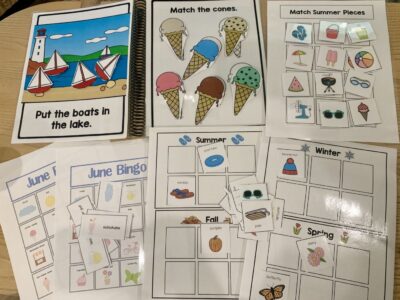
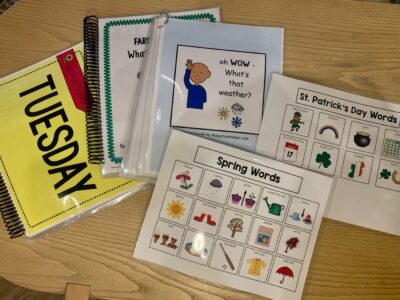
- Evidence-based practices for children with autism are supported by research and provide the highest quality instruction. Included is Computer-Assisted Instruction (CAI) – the use of computers to teach language/communication, reading (including spelling and vocabulary), and math. Certain apps utilize other evidence-based techniques such as: Video Modeling – a teaching method that uses assistive technology (computers, digital cameras, etc.); Data Collection – a tracking system to analyze progress and adjust instruction as well as self-management; Visual Supports – tools to support a student throughout his or her daily routine including schedules, maps, labels, organization systems, timelines, and scripts.
- Some students with autism who have limited verbal ability or are unable to speak can use tablet apps as Augmentative and Alternative Communication (AAC) or Voice Output Communication Aid (VOCA)/Speech Generating Device (SGD) that produce digital speech.
- Students with autism experience great difficulty with language, and therefore, with learning academics. Because technology is a multi-media experience, it lends itself more easily to differentiated instruction and multiple intelligences like musical, spatial, and bodily-kinesthetic. This diversity in learning teaches not only academics but also life skills, job skills, and communication skills which are most important for students with autism.
- Children with autism can have sensory-motor deficits. Portable and lightweight tablets and Chromebooks eliminate the need for carrying heavy books around, which can be very helpful for those students with weak upper body strength. Tablets and Chromebooks are interactive through touch which replaces laborious everyday handwriting for those students with fine motor challenges. Digital visual displays, speech input, and speech/audio output provides a more interactive sensory experience.
- Most efficient, technology is rapid and always provides the correct output which keeps students with autism involved with confidence. Since there are no books, pencils, or paper to juggle or comb through, this helps not to overwhelm or frustrate students with autism. While saving our planet’s paper resources, children with autism are also keeping up with society to succeed and thrive into even more technologically-advanced adult lives.
Technology can be more cost-effective than traditional materials as more than one student can learn from a device or a website, and some are even free. Computer websites for all students, especially children with autism include: Raz-Kids – an online guided reading program with interactive eBooks, downloadable books, and reading quizzes; Starfall – a free website which teaches the basics of reading and features interactive books and phonics games; PBS kids – provides recreation, entertainment, or earned rewards. These websites can be displayed on a Smartboard or interactive white board.
- Faster and more efficient teacher-parent communication is afforded through some apps like ClassDojo which tracks student performance and classroom management. Parents and teachers can electronically message in real time through the website or from the mobile app.
- Just as we “look something up online” rather than have someone give us the answer or set the alarm on our smart phones instead of having someone wake us up, technology fosters independence which is the ultimate life goal. There are apps for organization, daily planning, home assignments, behavior modification, academics, communication, and recreation. Since students with autism have many similar learning needs as other students, consider all educational apps and not just those that are tagged as specifically for autism.
This list from Autism Speaks, an autism advocacy organization, shows some of these common learning characteristics: https://www.autismspeaks.org/sites/default/files/pedagogy_wheel.pdf
This search engine from Autism Speaks explains what each app targets, including AAC, recreation, social skills, communication, functional skills, language, math, and reading along with the supporting device and appropriate ages:
https://www.autismspeaks.org/autism-apps
As a Speech-Language Pathologist and Applied Behavior Analysis instructor for over 20 years in public, private, and specialized schools, I have witnessed first-hand technology’s role as a major element to enhance and transform how we educate our students with autism. Technology is not meant to replace human interaction, especially when teaching students with autism as the ability to use language as a social tool is at the heart of the disorder. While technology improves the delivery method of instruction, you as the teacher have always been – and continue to be – the most important driving force for your students.
About the author:
Karen Kabaki-Sisto, M.S. CCC-SLP, is a certified Speech-Language Pathologist and Applied Behavior Analysis instructor. For over 20 years, Karen has been helping people with autism improve their communication abilities within public schools and at-home settings. After a decade of technological experimentation, she invented “I Can Have Conversations With You!™”, a life-changing therapy program for iPad to help people with autism enhance their social and language skills like never before. To learn more, please visit www.iCanForAutism.com.


- Planning for the Fall: Part 4 and 5 – Visually Structured Tasks and Routines - January 30, 2026
- Using TAH Curriculum for Homeschooling from a Homeschooling Parent - September 10, 2022
- Using The Autism Helper Curriculum for Homeschool - August 8, 2022