
1. Rethink Prompting
When working with students with autism, you get pretty used to using visuals and gestural prompts. In order to work with students with VI, you have to shift your thinking to using verbal and physical prompts.
While a student who is blind or has a visual impairment needs verbal prompting, students with both a VI and autism may get overwhelmed with too many verbal directions. Orientation is a priority. Letting your student know where they are and what they are doing is essential and this still can be done with shorter verbal phrases. For example, if you want to orient your student to items on their lunch tray, you can physically prompt them to touch where certain foods are on their tray and say, “Apple here.”; “Sandwich here.”
2. Think Tactile
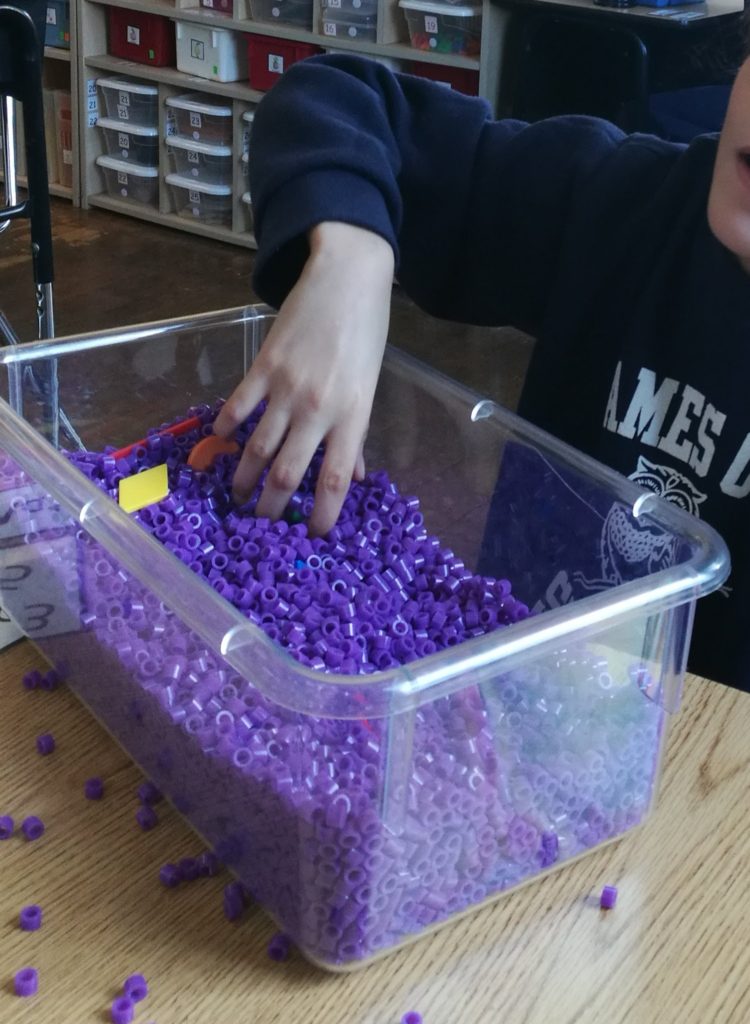
Look at the tasks and materials around your room and chances are you already have items that would be ideal for students who are blind or have VI. I’ve included some of the items I am using in my room that have simple modifications so all learners can participate. I’ve also included some items that I use that are specific to students who are blind, but any student could also use them-such as tactile letters and numbers.


You can add Braille to a task you already have to make it accessible for all your students.

Use real, everyday items to help students build a tactile vocabulary. Allow your students to feel all features of the items (prongs on the fork, sleeves on the shirt) and at first, verbally prompt the student to give the name of the item (“You are touching a shirt. Shirt. What are you touching?”), so the student will be able to tactually identify the item independently after repeated practice and verbal prompts.


Allow students to use their other senses through scented makers and crayons, wiki stix and shaving cream!


3. Play to Their Strengths
Students who are blind or have visual impairments are usually auditory learners, so it is a great opportunity to use intraverbal instructional programs! Students can learn their personal information, letter sounds and rote counting through repeated practice. A challenge you might have is that students will repeat the question. I usually have another adult (or a higher-functioning student that can provide a correct verbal model) verbally prompt the student with the answer after I ask the question.

Even though your students with VI may not be able to see these cards, they have functional questions you could use for an intraverbal program. You can see more information about this product here.
4. Use Music and Sound
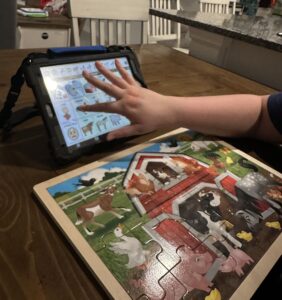
Using music and sound can be enjoyable and functional for students who are blind. One way I have used music in my classroom was incorporating a “dance party” break, where I play the Kidz Bop Pandora station and a lot of my students really enjoyed it! I also use the Jolly Phonics songs during the AM Group and at my reading station and I do need to modify it because the program is multi-sensory, so all students benefit! I also incorporate sound by playing functional sound effects (e.g. car horn, vacuum) and teaching all my students (not just my students who are blind) to identify those sounds in order to determine what is going on in their environment. Sound feedback is so important to students who are blind. One of my students who is blind uses a communication device and his button choices are in Braille so he is able to select the output he wants to communicate. Using large sound buttons can be beneficial for students who pre-Braille to make choices, to gain attention or to use in a sound sequencing instructional program.


5. Use Peer Buddies
Have one of your higher-functioning sighted students be a peer buddy to one of your students who is blind or had a VI. Obviously a lot of training needs to happen in order to make this possible. It is great way for students to learn how to help another person, verses just doing something for the other person. I have one of my students who is blind be the line leader and his peer buddy is the second person in line and gives him verbal directions. It’s a great way to get both students to pay attention to where they are going! I also have his peer buddy help him with his lunch tray, direct him to the garbage and guide him during his classroom job.

My student’s peer buddy even went into the vision classroom with him and learned all about Braille and Braille writers from the vision teacher!
I hope you found these tips useful! As special educators, we see so many different students with different abilities and we always want to be ready to meet their needs. Even if you don’t currently have students who are blind or have visual impairments, you can always refer back to this post!

- Focus on Five: Sub Plans - January 10, 2023
- Focus on Five: Setting Up Daily Leveled Curriculum - November 22, 2022
- Focus on Five: Classroom Tour - November 8, 2022