Monthly training, new resources, and a community of educators — JOIN THE WAITLIST

Focus on Five: {Must-Have} Items for Data Collection!

This month’s theme at TAH is data collection! While this can be intimidating, once you start the process you will

Focus on Five: {Must-Have} Items for Data Collection!

This month’s theme at TAH is data collection! While this can be intimidating, once you start the process you will

This month’s theme at TAH is data collection! While this can be intimidating, once you start the process you will absolutely love data and what it can do to help you and your students! So I wanted to start slow and share with you the five most essential items to ensure seamless data collection…

1. Clicker (Hand Tally Counter)

One of the most useful items in data collection that I have been introduced to is the the clicker, otherwise know as a hand tally counter. You might have seen these at sporting events or a places where teachers get beverages after a rough week of teaching… You can purchase them on Amazon and it makes collecting frequency data so much easier! It is especially useful if it is a behavior that is occurring often and too fast for you to tally. You can then put it on a chart at the end of the day, period or activity.

2. Pencils (with an eraser)

This might seem obvious, but it is important to use pencil with an eraser. In a pinch, you can use the same pencils as the kids, but it is nice to have your own for teachers and staff to collect data to always ensure that you have an eraser intact. I love the Dixon Ticonderoga pencils in black so they look different than the kids’ pencils. Make sure that you have pencils easily accessible to staff or near the data sheet to ensure timely data collection.

3. Data Sheets

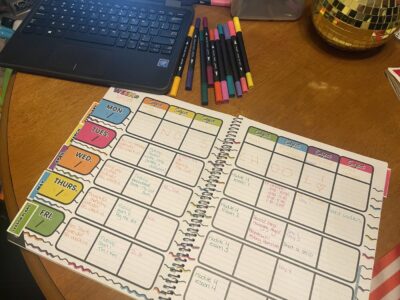
Having data sheets, copied and ready to go is another important item to have to make sure data collection is happening!  TAH has some very user-friendly data sheets, including Special Education Data Sheets and 20 Special Education Data Sheets Set 2. Set one includes 24 different data sheets including the classic ABC, frequency count and a discrete trial data sheet. Set 2 includes a lunch skills data sheet, multiple fluency data sheet (my favorite!), wh- question data…and much more! The best part is that they are editable so you can tailor them to the needs of your students and your classroom!

4. Binders or Clipboards

Going along with the data sheets, you need a convenient, organized and easily accessible way to store them. I personally prefer binders, either for a small group of students, individual students or a type of data/assessment. I have also used clipboards in certain areas of the classroom in which that data is collected. I previously kept a clipboard by the door for student elopement data so we could record the time and hypothesized reason (e.g. bathroom, water, spinning in the hallway) for the elopement when we brought the student back inside.

5. Organized Learning Materials

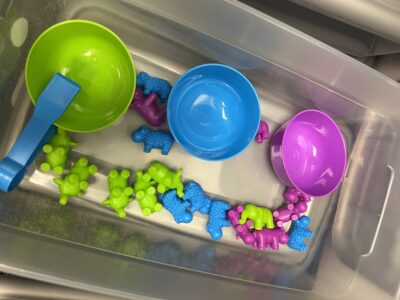
I found that it was easier to take data when all the materials I needed were in one place! Seems obvious, but I was struggling to collect academic data because all the materials I needed were in different parts of the room. Find a system or area that works for you. For my instructional program data, I keep it all at my teacher time center. I keep the materials in a closed box on my table so that students don’t get into them. I ended up just keeping them in one contained because I have multiple students working on the same goals, but if you wanted to use three bin drawers or another way to organize…do what works for you, your classroom and your students! 

I hope you got some ideas about how to implement data collection in your classroom! Share any items you use to make data collection in your classroom a breeze!
Holly Bueb
Latest posts by Holly Bueb (see all)

Leave a Reply

Your email address will not be published. Required fields are marked *

Live & On-Demand Training

Picture of Holly Bueb

Holly Bueb

Related posts

Planning for the Fall: Part 4 and 5 – Visually Structured Tasks and Routines

As the beginning of the school year is weeks or even days away, let’s jump into the final two parts…
Learn More

Top 10 Must-Do Tasks from a Self-Contained Elementary Teacher

If anyone is feeling like me, I get my lesson plans done and materials prepped all weekend, and then the…
Learn More

Creating a Predictable Environment to Decrease Behaviors and Increase Independence

Defining areas in the classroom that serve a specific purpose is crucial for all students.  When you walk into a…
Learn More

FAQ

Do you accept School Pos?

Yes! We are happy to work with school districts to complete orders from our store for individual or groups of teachers. We accept purchase orders, can provide formal estimates, or complete any vendor paperwork you may need to support your district’s purchasing process. Submit a PO to [email protected] or request our W9 to get started!

The Membership gives you continuous access to a growing library of professional development, monthly trainings, resources, and practical tools you can use right away. It’s designed for educators, clinicians, and teams who want consistent support, fresh ideas, and ready-to-use materials all year long.

Courses are focused, start-to-finish learning experiences. Each course dives deep into one specific topic with structured modules, step-by-step instruction, and a clear learning path. You move through the content intentionally to build mastery in that area.

Curriculum Access is a complete, standards-aligned curriculum platform with lessons, materials, data tracking, and implementation tools built for special education classrooms. It helps you actually teach the skills, not just learn about how to teach them.

The resources you purchase are delivered electronically. We will not be shipping any finished products to you – they are all electronically downloadable.

We offer a lot of free information on everything from behavior supports to academic instruction to communication skill building. Start off at our blog, check out our YouTube videos, listen to our weekly podcast, and go in-depth with our free webinars.

Contact us