
Over the last week, I have had the privilege of visiting several classrooms in our county and talking about one of my favorite things…structure! If you have been following along this past month, The Autism Helper bloggers have been busy talking about different ways to set up classrooms and how to utilize some of our favorite products! While I do believe that every teacher needs to find their own flow in their room based on the needs of their students, it never hurts to see some inspiration! While in these amazing classrooms I took pictures of some of my favorite highlights. Let’s look!
Schedules and other visuals


I love how this pre-k 3 teacher has her color-coded visual schedules posted as soon as the kids walk in. She teaches these schedules on the first day! While at first this is not perfectly timed and it’s all adult hands-on deck, it’s worth it to start immediately, even if the number of picture cards needs to be reduced. These schedule cards (made with Boardmaker) will physically show students where to transition as there are larger matching pictures at the destination. If you need help trying to figure out what type of schedule is most appropriate for your learners, check out Heather’s post here!

Next up are these great visuals that another teacher is using in her comprehensive classroom. The first is a visual name tag by Autism-SPICE Classroom on teacherspayteachers. I love these name tags because the most needed visuals are all in one place for this student! This visual could also become mobile with the student as he/she travels around the classroom and school. You could modify this name tag and add a student’s picture and teach a student to mark off the “I feel, I need” symbols with a dry erase marker. As with all visuals, this name tag and its picture symbols should all be modeled with the student in different activities and settings.

This teacher created mini choose boards that hang from each student’s desk area for easy access for when they are finished teacher time. Each choose board is unique to the student’s interests. When it comes to finding student interests, take the time to be a detective and observe what they gravitate towards. Our idea of what “should” be interesting to a student may not always be what they enjoy. For example, this teacher has a student who enjoys flicking pom poms around. These interests can also change daily and weekly so it is a great idea to have a bank of pictures so students can be empowered with true choices! The individual student boards might be a great idea if you’re looking for different ways to adhere to COVID precautions.
Physical layout
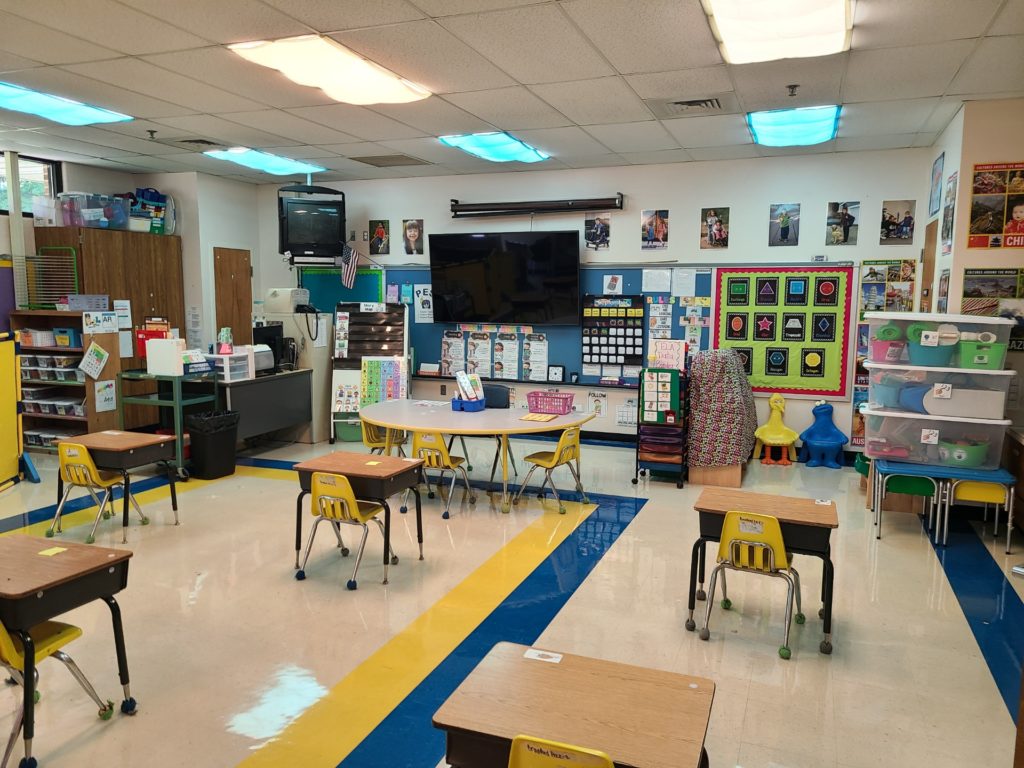
When I was in the classroom, I loved figuring out the layout of my room. The feeling of walking through the door and having the flow just feel right was the best! By flow I mean it the routine and set up matched: as my students first walked in, they were met with cubbies to hang up their belongings and next, they naturally saw their visual schedules on the wall. Following the schedules were the tables for optional breakfast and specific toys set out for morning choose time. Check out my post here on how I quite literally turned a faculty lounge into a classroom!

In the classroom picture above, the teacher and I created this L shaped area for her morning meeting time. She liked the feeling of the enclosed area where she can store materials and have everything at hand! Having clearly defined areas in your classroom will make teaching expectations and routine much easier! If you think about it, you may understand that the morning meeting area takes place in that corner however your students may not receptively yet realize this. By creating physical clear layouts and defined spaces, you are not only supporting receptive language skills but routines as well! If you find yourself constantly repeating yourself or redirecting your students to certain areas, you may need to add more physical structure (you can always fade away later)! You can do this with screen dividers, shelves, tables, desks, anything!

This picture is of a centers area in a pre-k 3 classroom. Notice how the shelves are not yet filled with toys, this is on purpose! Keeping the shelves light and simple will help this teacher with teaching expectations and play skills. Too many toys can result in dumping, throwing, and chaos! I also love her dividers which separate it from a different center! She also has pictures on in each cubby part of the shelf so that she can teach her students where the toys and baskets belong. Using these visuals can eliminate the verbal directions and create more independence in the long run.
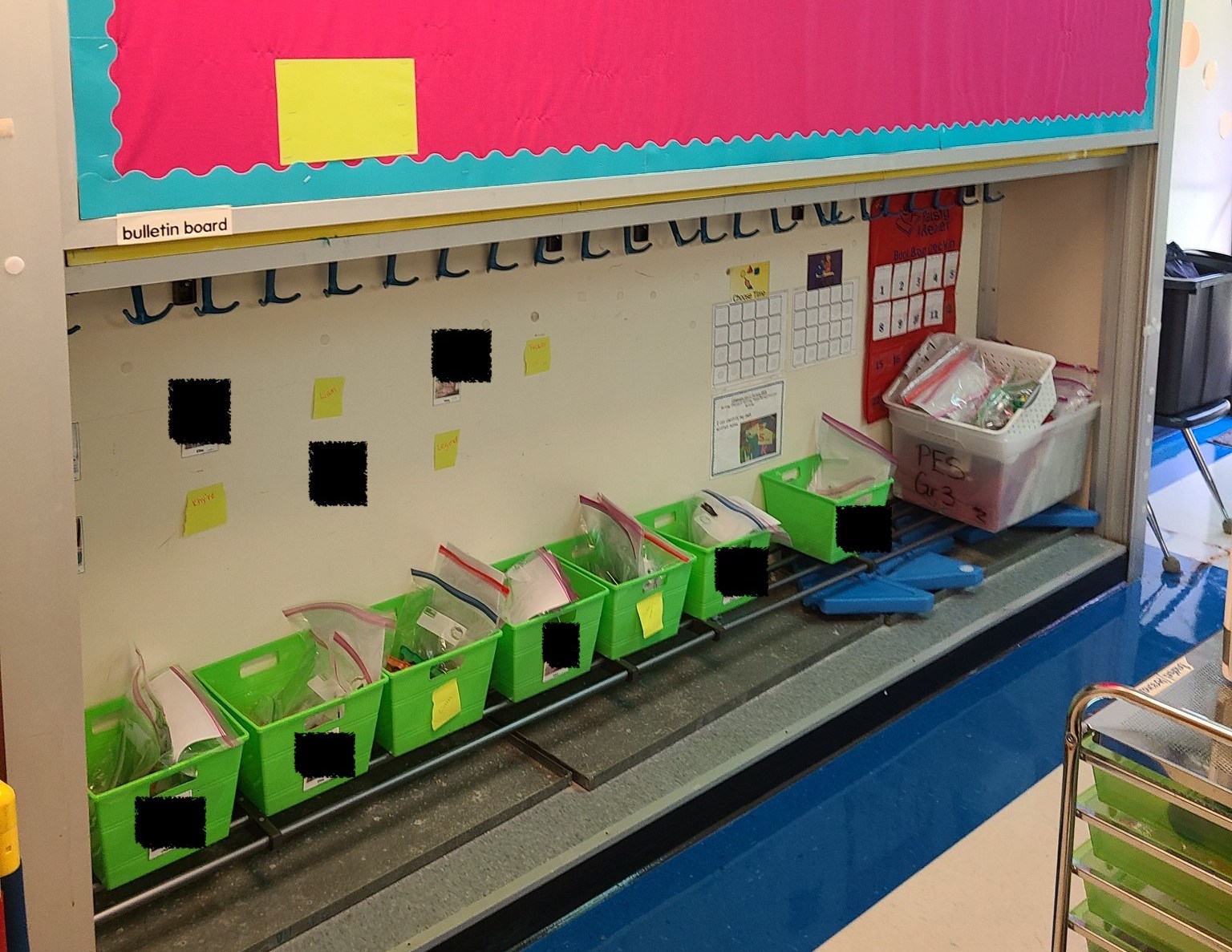
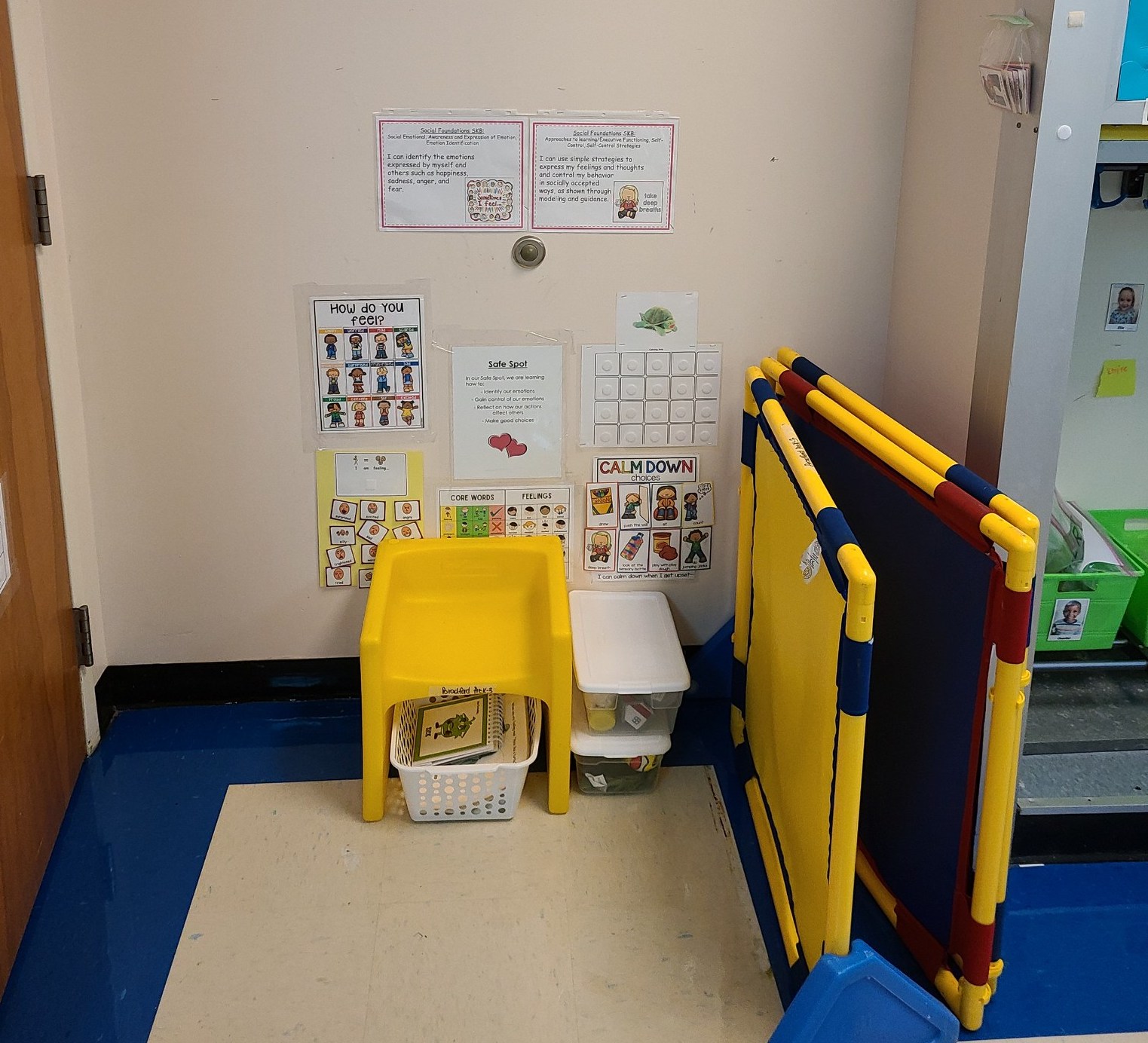
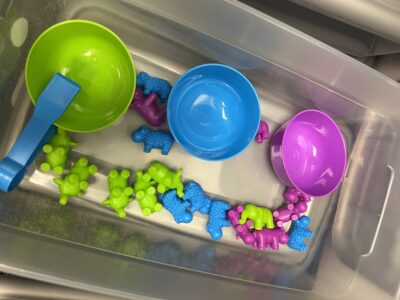
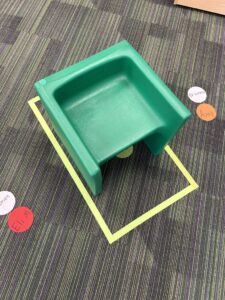
The two pictures above show a sliding bulletin board cabinet used to house individual totes and a cozy corner with visuals and mini screen dividers (how cool are the mini size?). This teacher uses these green totes to store individual materials such as play doh, counting cubes, fine motor activities and other choose materials. Each tote has the student’s picture and name on them so there is no confusion as to which bin is theirs. The cozy corner has emotion visual boards, calming objects and other small activities. This area is taught by the teacher on what to do in this area and how to know how much time they should visit this area for. Pre COVID the area had soft blankets and a bean bag cushion however the chair is easily wipeable after a student visit.
Starter Materials


You may be brand new to your group of students or perhaps you’re returning with the same group. When I visited these classrooms, I was so excited to see The Autism Helper’s Paraprofessional Training Manuals printed, and ready to go for staff training! These manuals contain a complete training package for both new and veteran classroom paraprofessional within the special education setting. Find out more here. I was also super excited to see The Autism Helper’s Easy Matching Weekly Workbooks. Each workbook contains 8 easy matching activities such as matching out of a field of 6, errorless matching, or match by color. The activities are all themed with high interest topis and items. Each workbook has different activities at the same skill level so the student or child can do one workbook a day and not get bored. The easy matching tasks are great to build independent work skills, fine motor abilities, and task initiation! Check them out here!
Whether your first week back felt like smooth sailing or a complete circus, remember to take a breath, analyze the parts that DID go well and duplicate it! If your centers felt out of control take note of why. Were toys being dumped and stepped on? Did your students not yet know where they were supposed to be going? Add more physical boundaries and/or visuals and just remember that the first month or more you will be focusing on teaching the routines! It’s worth the time up front or you may find yourself putting out small fires all year! Happy Teaching!

- Cultivating Calm Through Sensory Gardens - September 3, 2025
- Setting Up a Visually Structured Classroom: Little Details, Big Impact - August 6, 2025
- Nouns and Verbs: From Books to Play - July 2, 2025