

We have shared all of the reasons why classroom structure is important and what things you should consider before you get your furniture moving self into action. Now it’s time to get down and dirty. If your classroom is anything like mine – somehow 3 months of summer seclusion results in every piece of furniture being covered in a thick layer of disgustingness. Also if your school is anything like mine, the custodians who clean the room have a miraculous talent of putting every piece of furniture in the exact opposite spot I’d like it to be. I think they are getting back at me for using so much glitter during the school year. Touche. Either way the first day of classroom setup up ends up with me embarrassingly sore, extremely sweaty, and dirty as hell. So let’s get at it!
First things first…
You need a ton of furniture! You need to divide your centers and create physical division within your room.


How to Create Structure in Your Classroom:

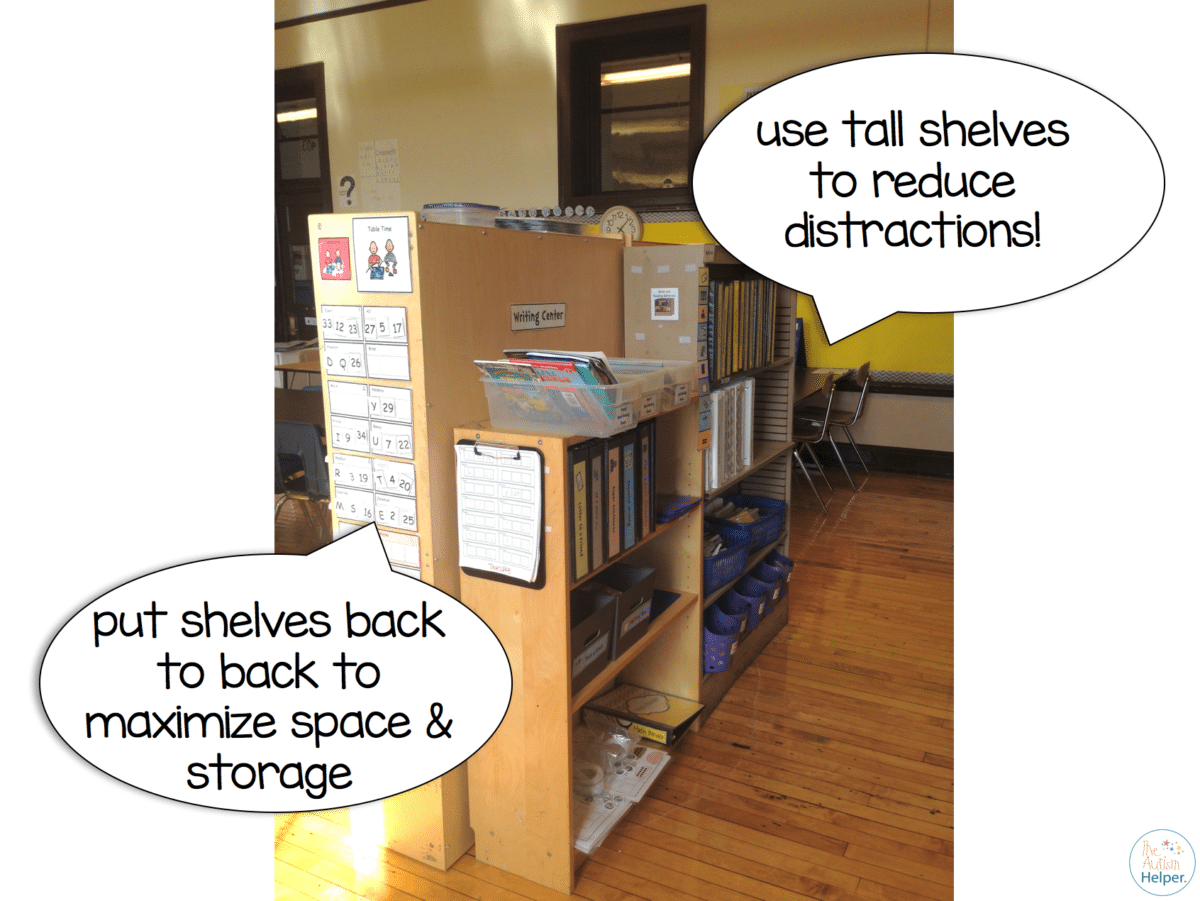

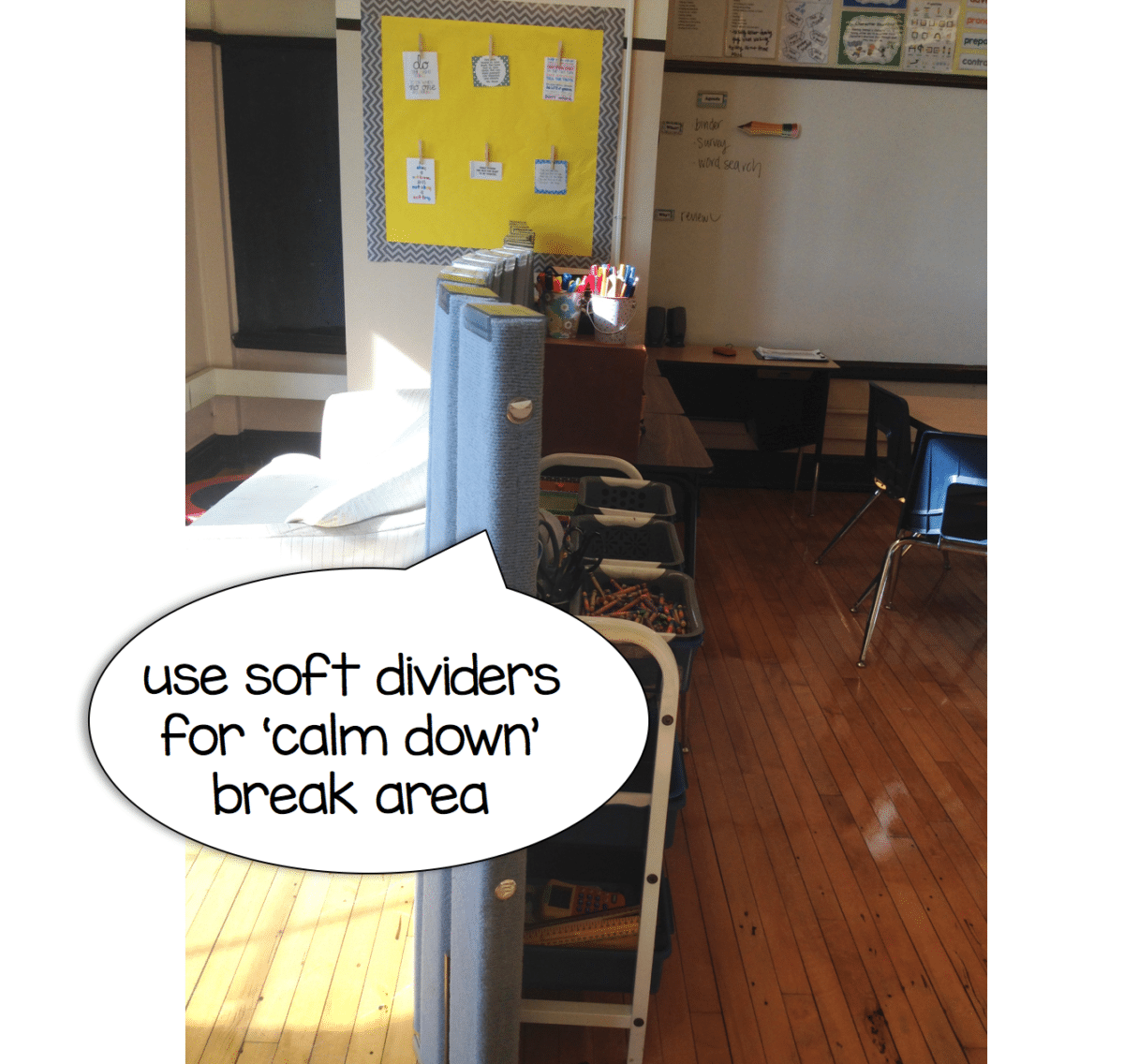


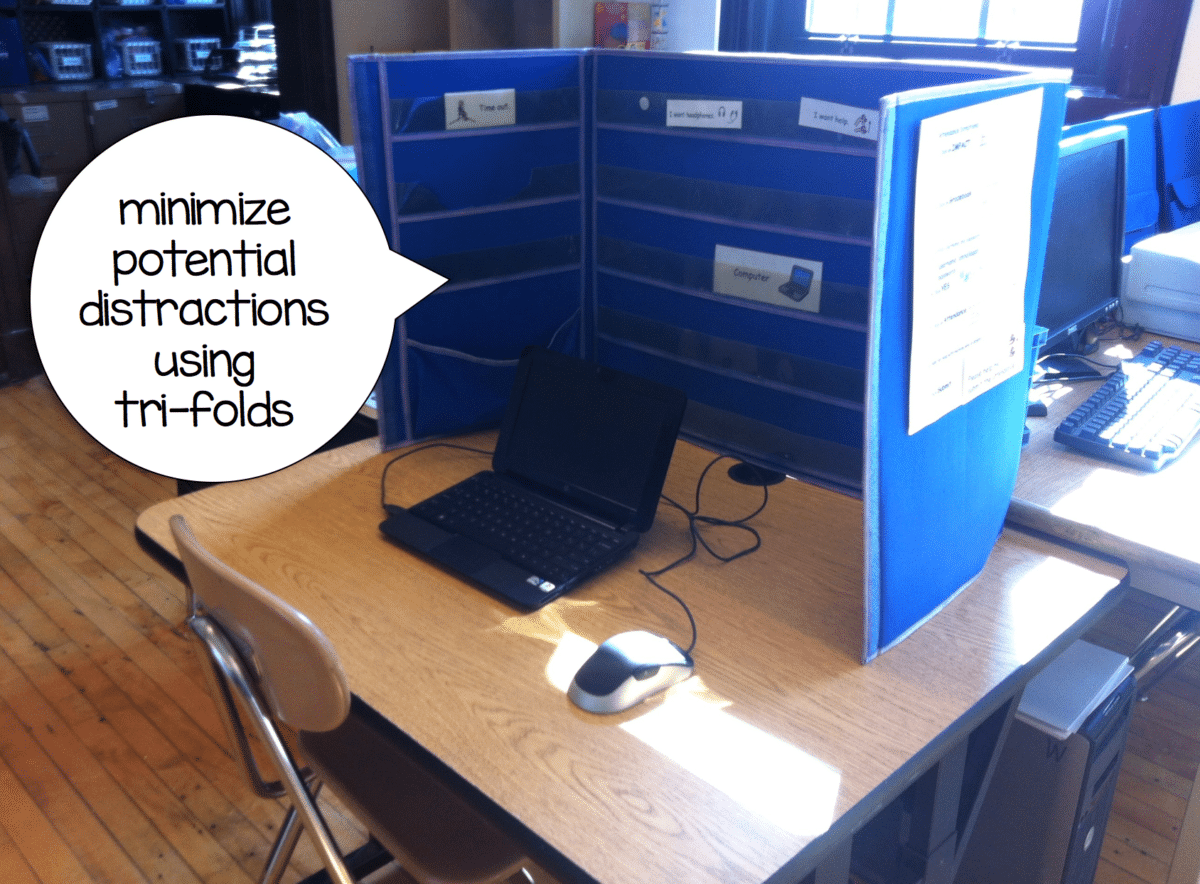

Here is a sample floor plan:


Latest posts by Sasha Long, M.A., BCBA (see all)
- Planning for the Fall: Part 4 and 5 – Visually Structured Tasks and Routines - January 30, 2026
- Using TAH Curriculum for Homeschooling from a Homeschooling Parent - September 10, 2022
- Using The Autism Helper Curriculum for Homeschool - August 8, 2022
13 Responses
Hi Sasha. Thank you for sharing this wonderful floor plan. Your classroom looks to be very large, which is good. My classroom is good size but I don’t know as I could fit all that furniture in it. I am wondering about your aide-run stations… do you actually have 2 aides who do stations while you do direct instruction? Do you also have aides who work 1:1 with students during those times? My dilemma is that I only have one aide who will be 1:1 this year. I will have the other students by myself, which is fine because most of them can do independent work while I do direct instruction. My concern is how to deal with students who are off task while I’m doing direct instruction and the aide is working 1:1 with the student with very intense needs. In the perfect world…. 😀
Sorry, I also meant to add that I feel like I should be able to see all students from any angle of my classroom. That is my concern with using tall furniture as dividers.
How do you handle blind spots?
I agree. I don’t like not being able to see everyone, mainly because I usually have several students with behavior concerns. This past year I faced personal desks to the walls and had the lower metal bookshelves. I then made sure to seat the students in a way that would decrease distractions. Sasha thanks for all the hard work you do. It’s very, very helpful. Love your products and info.
I have one aide who is a one on one and one that runs a station. I definitely get it, when I am working with a group – I always keep one eye on the independent working students and provide praise and redirection when possible. Wish it wasn’t the case because it can be distracting and/or take attention away from the group I am working with but that’s the reality, right? haha.
That’s a good point. So like I said, students that may need some redirection while working independently, should probably not be behind big furniture. My break area is pretty closed off and the back of the room is more closed off. In the back of the room is a para-run station so that works well and makes it a little quieter also for her to work on fluency instruction. Other students working on their own are more in the middle of the room so I can keep an eye on them 🙂
Great question! I typically will purposefully put blind spots in areas where adults will be (ie. para-run station or one on one para area). I like shelves that are high enough to provide a divide but that I can see across. Keep in mind – most of these photos are for classrooms with older kids (third grade on) so for younger kids even smaller (ie. shorter) dividers would work!
Sasha, your room is absolutely beautiful and functional as well! Thank you so much for sharing the floor plan. I printed out your plan and because my room is much smaller, I can cut the stations apart and choose areas that will work for us. I am very visual and you have given me a fabulous tool! Just a thought about dividers: you can make your own very easily and cheaply with some PVC pipes and a sheet folded and sewn down the sides. This also allows you to choose heights, lengths and colors that work for your space.
Great ideas!! Love the PVC pipe suggestion! SO creative! 🙂
Sasha, Thank you so much for all of your hard work! I will be taking these suggestions into my new classroom!
Thanks for reading! 🙂
Where did you get the soft dividers from? Thank you for this post! Such great ideas 🙂
Thanks for reading! You can find a similar one here: https://amzn.to/3ItMuRo