

Getting notification of a new student starting is always quite stressful for me. I LOVE having new students join our class and routine, but there is also a TON of information and paperwork that gets thrown at us when we get new students. First, I am invited to an intake meeting where the evaluation team discusses the student’s needs, we discuss placement options, and write the IEP. Next, I become the case manager in our IEP system. After that, I meet with my team to discuss the IEP, goals, minutes, accommodations and modifications. Lastly, I change our classroom schedules and rotations to include our new student. However, it does NOT stop there, and I don’t believe that the information ever stops! In this post, I will share some of my favorite baseline resources from The Autism Helper as well as my beginning steps to getting ready for a new student, no matter what time of year it is!
We are living through a pandemic, and the protocols for how and when students start school has changed just a little. My school district has been remote learning since March 2020. We were recently notified that we will be starting a hybrid learning model in March of 2021. The remote learning procedure is that when a new student registers, they are given a start date and asked to come to the school to pick up materials and an iPad. Once they have their iPad, they are set up and ready to start school! At this point, my team and I have had time to prepare for the new student’s start date, and the next few weeks are spent taking baseline data. This will give us a better idea on the skills of the learner. We review the skills that were shown during the evaluation, and how are they engaging in those skills within a classroom setting.

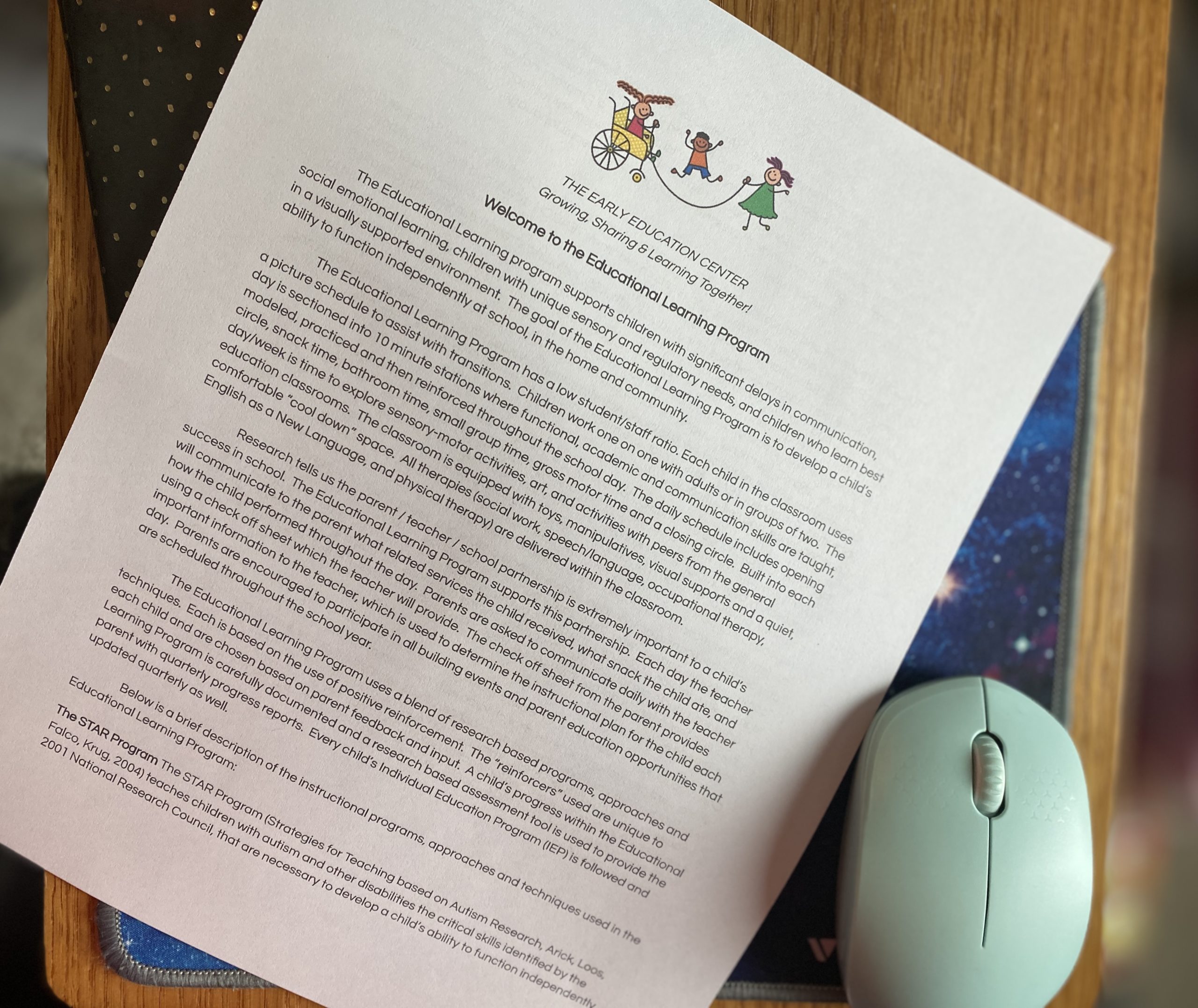
Start of the year forms
Since we are in the remote setting, I am able to send these documents home digitally. When we start hybrid, and eventually go back to in person learning, these are the documents that I send home with our new students on the first day of school. I avoid sending them home at the evaluation meetings because the families have just been bombarded with a lot of information and paperwork. The following are the documents that we send home:
- Getting to know your teachers: This includes information, both personal and professional, about myself and my two classroom TAs.
- The Autism Helper Must have forms and templates
- My favorites are the student questionnaire and the life skills rating form. These help me get a baseline idea on some of the functional routines that we will be working on with the STAR program.
- Reinforcer checklist: This checklist lists many items that may be reinforcers and an option for families to list them as a high reinforcer, or no reinforcer at all. There is also an option for families to fill in anything that may not be included on the list.
- Personnel information: This includes the school phone number, fax numbers, building Administration name and phone numbers, secretary information, and the school hours. I recommend that families keep this on their fridge or somewhere in their home so they can get to it quickly if needed.
- Welcome letter: The letter that I have created reviews the program structure, the reasoning behind the program, the related service team members and schedule, the alternate curriculum and research based interventions that we use.

Leveled Daily Curriculum
My go to (along with the STAR program student learning profiles) are The Autism Helper Leveled Daily Curriculum. These are worth everything! I use each curriculum for Language Arts, Reading Comprehension, Math, Functional Math, Functional Literacy, Science, and Social Studies. Included in the curriculum are 2 types of lesson plan templates, a detailed curriculum map, and 2 types of data sheets. Each include a pre-test and post-test, grading rubrics with data based decision making components, anchor charts, and additional activities. The curriculum are structured, visual, breaks down larger skills into manageable steps, embeds assessments, and utilizes data based decision making. The pre-tests are one of my many go to resources for beginning baseline data! When I am unsure which curriculum would be best for a learner, The Autism Helper has a wonderful matrix that is easy to use!: TAH Curriculum Skills Matrix.

ABLLS
This took me a longer time to figure out how I was going to implement, but now I consistently use the ABLLS-R Resource Kit from The Autism Helper. This is a great resource to determine the level of functioning of my students, identity future goals, and track progress. The data sheets that come with this resource are easy to use. The ABLLS-R is a great assessment, however, it can be difficult to collect and organize all of the materials needed. The Assessment of Basic Language & Learning Skills is best used along with The Autism Helper resources in order to gather the level of functioning for my learners. Using this information guides me to which task cards and materials that I need for teaching, progress monitoring, and working on goals for each earner.

Rubrics
Lastly, I use rubrics. I love rubrics for most of my students because they are quick and easy to carry around. The data is already written on the sheet for me! Having rubrics available allows me to observe and work with learners, and quickly take data by circling where they are performing. They are easy to analyze, bring to team meetings, and review for modifications and individualized instruction.
Put it into practice
Not only do all of these resources include data sheets to help me get appropriate baseline data, they include materials and lessons to help teach where there is a need or deficit identified. These resources show me where my learners are currently performing and where we want them to go next. They have progress monitoring tools within each of them, and post assessments are included to check for mastery. These resources all have a wide range of skills listed on each so I can individualize as needed. Taking appropriate baseline data shows our team where a learner is without intervention, and shows how much growth there is when we implement appropriate material. Without the baseline data, how will I know where to go?!

- Embedding Social Skills Into Every Lesson - November 24, 2025
- Top 10 Must-Do Tasks from a Self-Contained Elementary Teacher - September 22, 2025
- Setting Up the Classroom Environment for Independent Learners - August 20, 2025

2 Responses
Where can I find the e-learning rubric?
The E-Learning Rubrics were only available in the Professional Development Membership, unfortunately. Here is the link to the waitlist if you are interested: https://theautismhelper.com/membership-2021/