


It’s rule governed.
Our kids tend to like things that follow a pattern or routine. TouchMath has a set of rules we follow when completing problems. This works perfectly with some of our learners!
It’s visual.
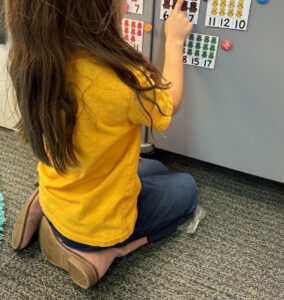
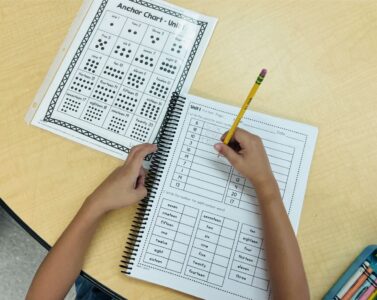
Those magic little dots are your students’ very own visual cue. No more counting blocks or using your fingers – the manipulative is built right into the number. The dots provide a concrete representation of each number which is essential for our students!


It’s structured.
There is not much left to infer or analyze with this system. It’s straightforward which aligns well with the concrete brains of some of our students!
Have a plan for fading those dots.
While I absolutely love TouchMath, I have a major warning label to throw over that endorsement. Be sure to have a plan for fading the dots. We do not want learners that rely on those touch points for the rest of their lives. We want students to utilize math in a functional way and that means across environments and settings. You better believe that no grocery store will have touchpoints on their price tags. So be sure to plan how you will fade those dots away.
Generalize, generalize, generalize!
Again, we want these math skills to be functional. That means not reliant on a certain prompt or type of worksheet. Start the generalization process right away!
Still work on the fluency/memorization piece!
You don’t need to only adhere to one approach while teaching math. I am always an advocate of giving our students a ‘bigger bag of tricks’ so they can be ready for anything. While you are working on TouchMath – continue to use fluency instruction to work on memorizing those important simple math facts.


- Planning for the Fall: Part 4 and 5 – Visually Structured Tasks and Routines - January 30, 2026
- Using TAH Curriculum for Homeschooling from a Homeschooling Parent - September 10, 2022
- Using The Autism Helper Curriculum for Homeschool - August 8, 2022

2 Responses
Where did you find the flashcards?
Here’s the link to TouchMath! https://touchmath.com/